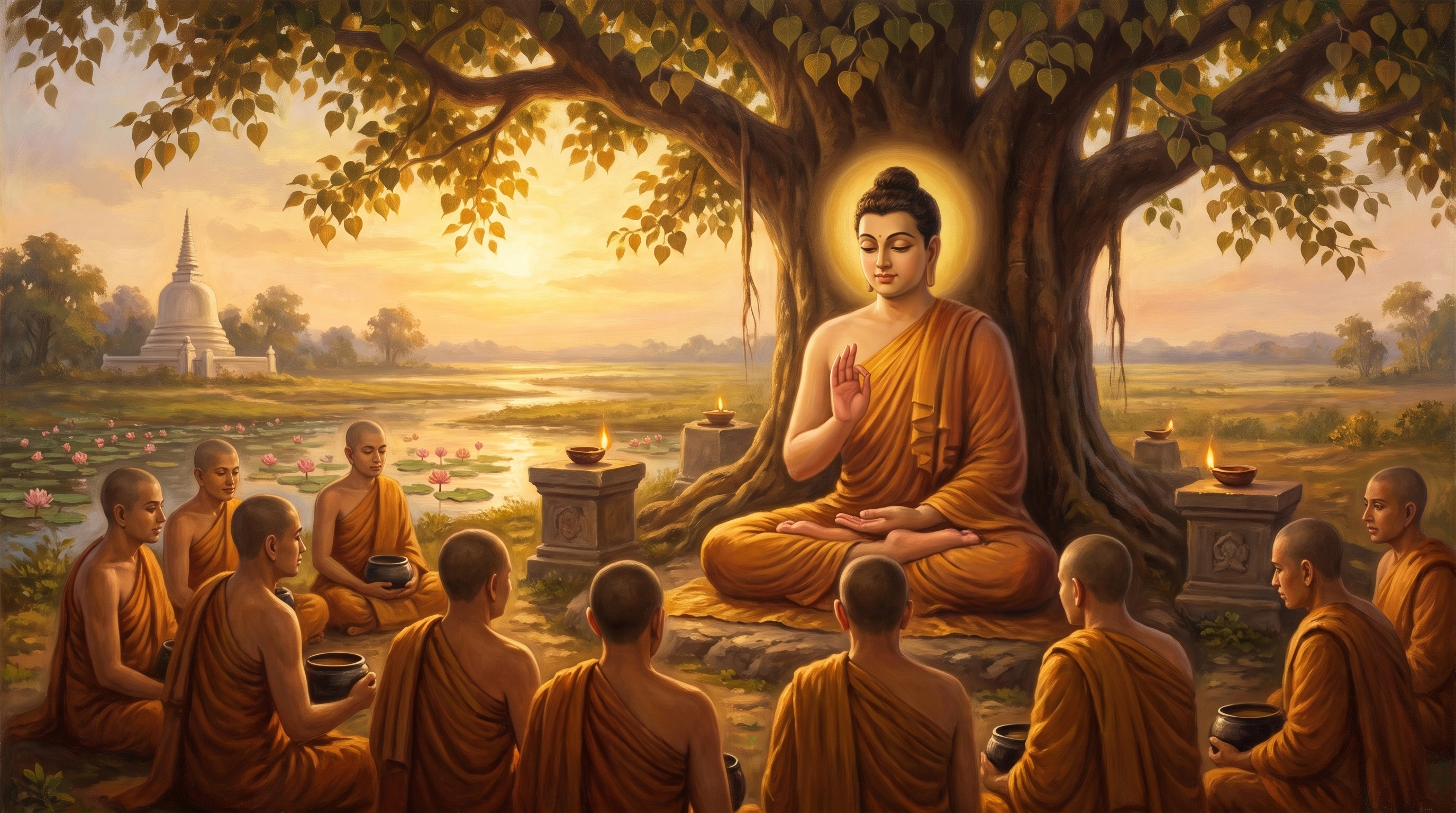
The Dhammapada — Sayings of the Buddha
The best-loved scripture of Buddhism — the Buddha’s own sayings on the mind, craving, anger, and the path to peace, in luminous verse with meaning for a modern reader.

Short on Time?
The Dhammapada in One Sitting
The Twin Verses
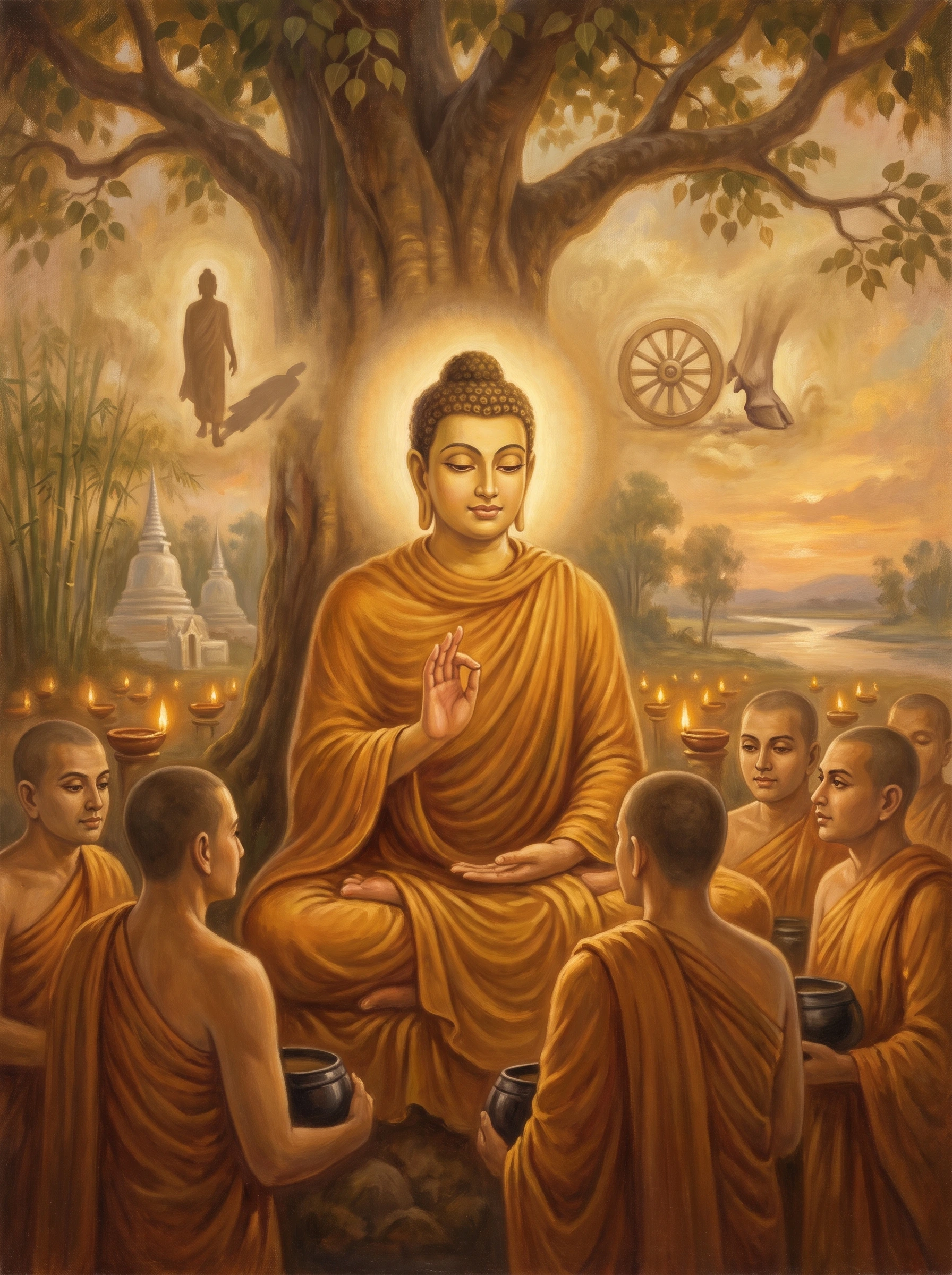
The Yamaka-vagga, the 'twin verses' that open the Dhammapada, teaches that mind precedes all things: act or speak with an impure mind and suffering follows, act with a pure mind and happiness follows like a shadow that never leaves.
Heedfulness
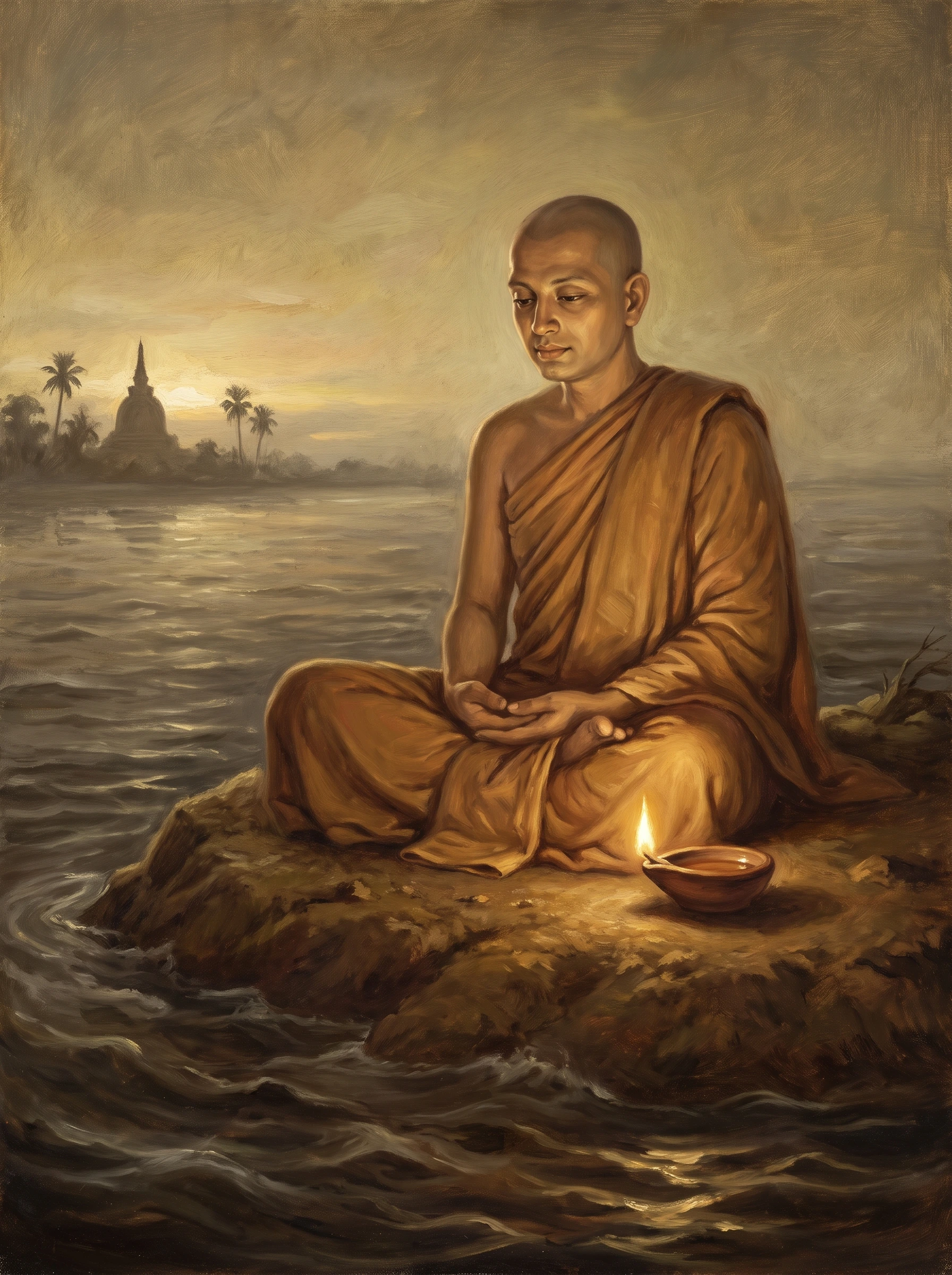
The Appamada-vagga praises heedfulness (appamada) — watchful, mindful vigilance — as the path to the deathless, while heedlessness is the road of the spiritually dead; the wise guard heedfulness as their greatest treasure.
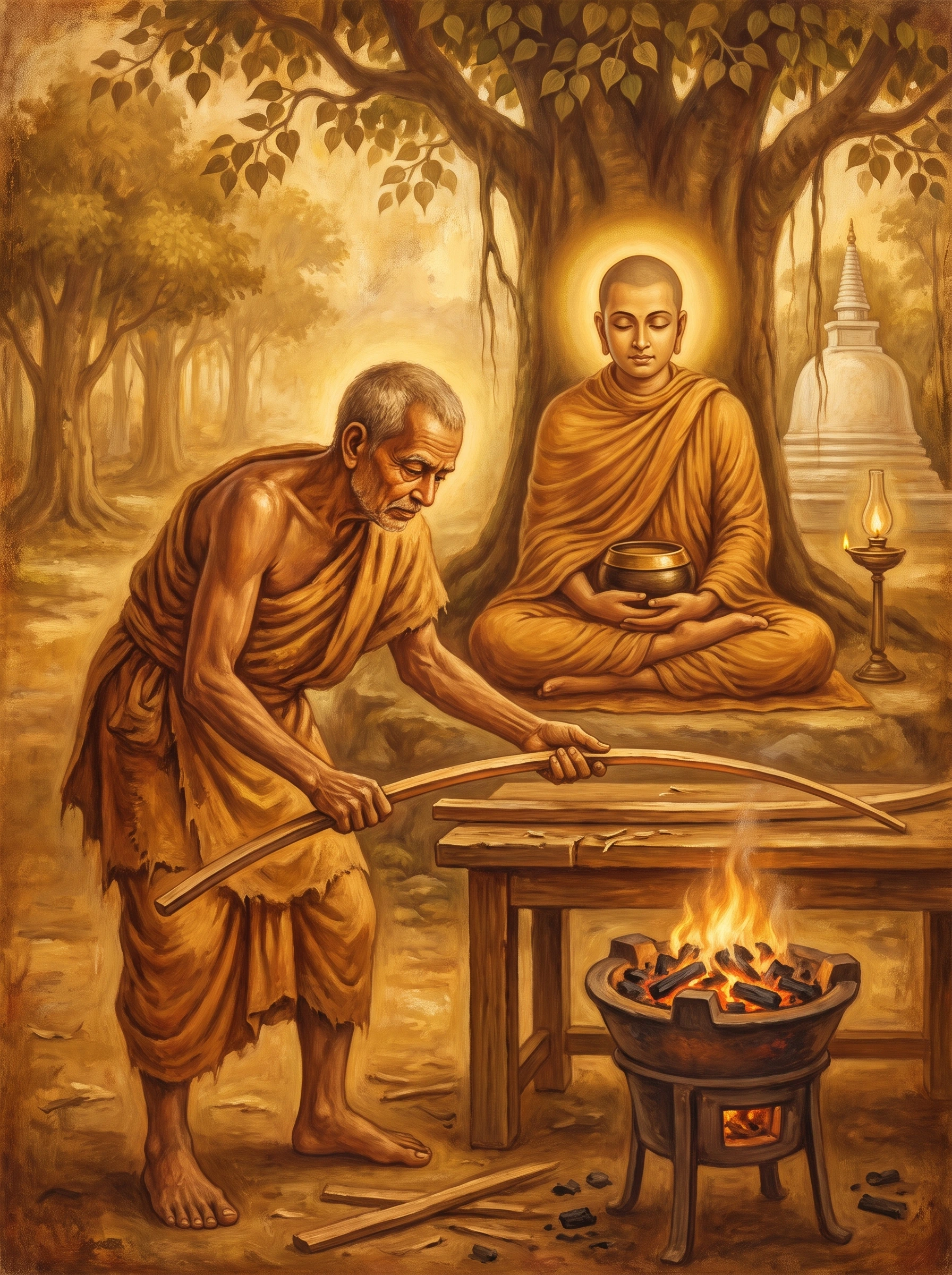
The Restless Mind
The Citta-vagga likens the mind to a fish thrown on dry land, a fletcher's arrow, a wandering traveller — restless and hard to hold; the one who tames and straightens this mind wins a happiness no enemy or kinsman can bestow.
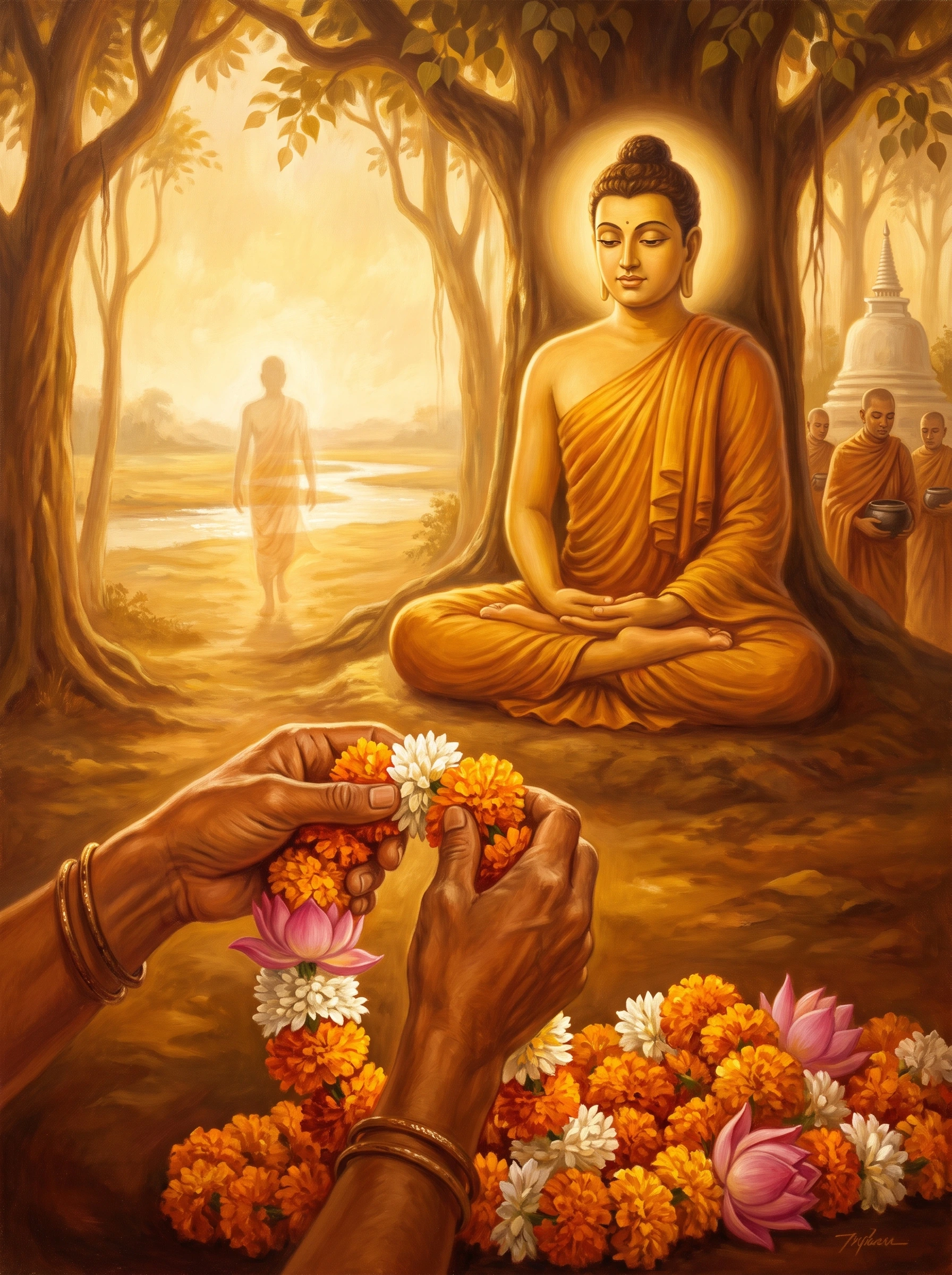
Flowers and Impermanence
The Puppha-vagga (the 'flowers') turns gathering blossoms into an image of the fragile, foam-like self: as a bee takes nectar without harming the flower, the sage moves through the world; and death carries off the one who only gathers pleasures, as a flood sweeps away a sleeping village.
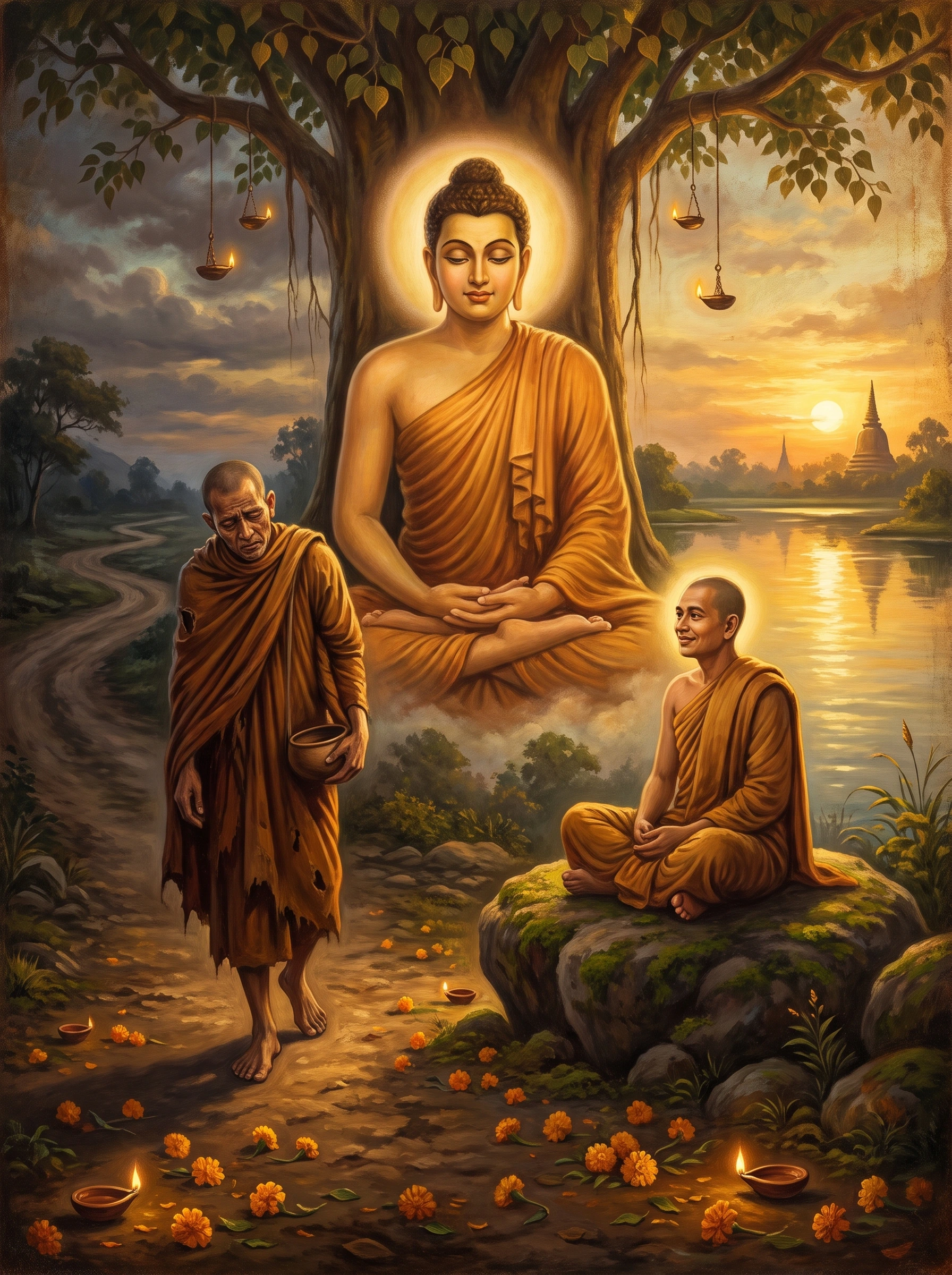
The Fool and the Wise
Two vaggas set side by side: the Bala-vagga on the fool, for whom the night is long and the round of rebirth longer, and the Pandita-vagga on the wise, who take correction as a pointer to hidden treasure and grow calm and unshaken as a deep, clear lake.
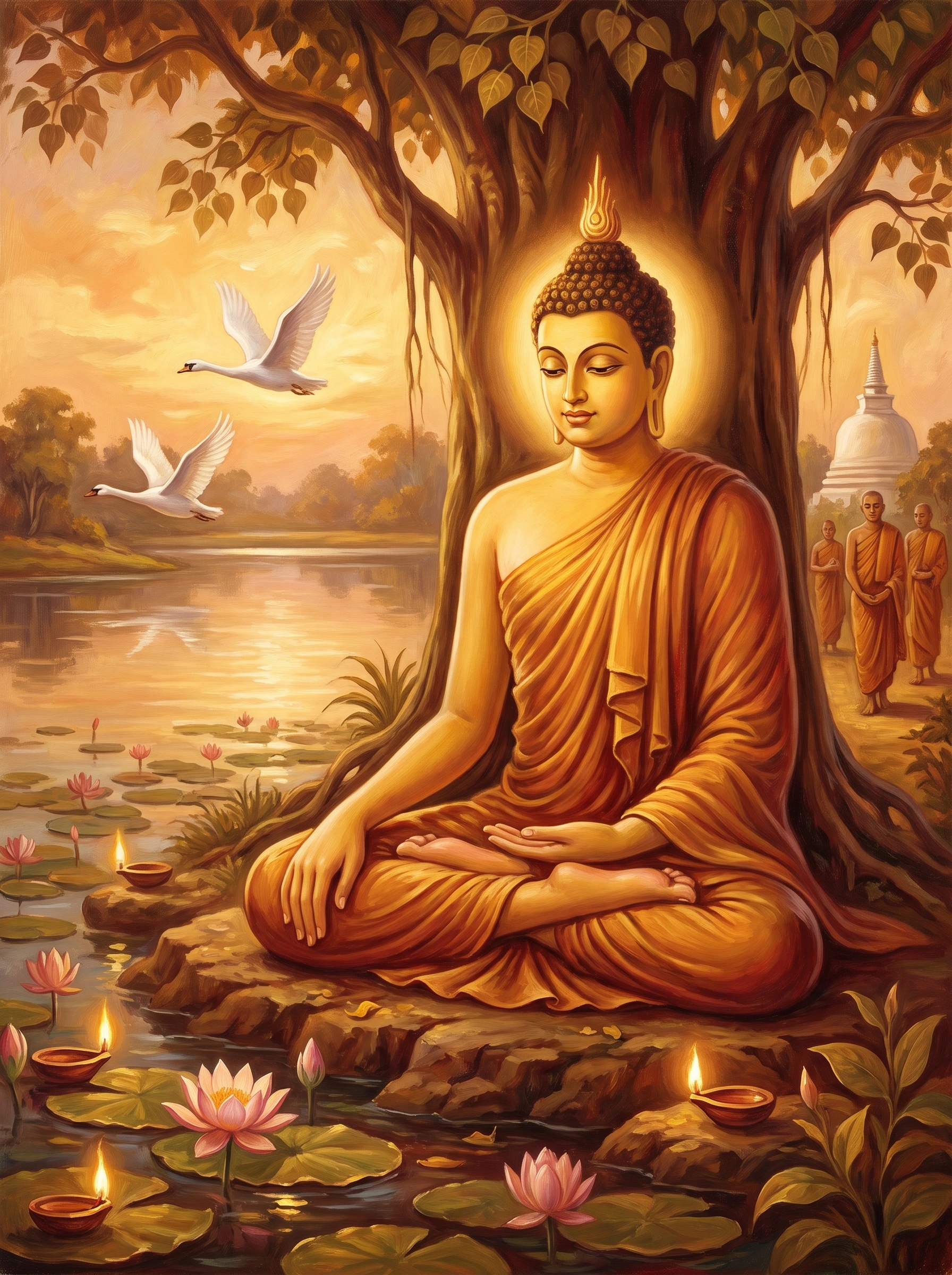
The Awakened One
The Arahanta-vagga portrays the perfected one whose journey is done, free of fever, tracklessly at peace, and the Buddha-vagga celebrates the Awakened One and his teaching, giving the famous refuge and the summary of all Buddhas: to cease from evil, to do good, to purify the mind.
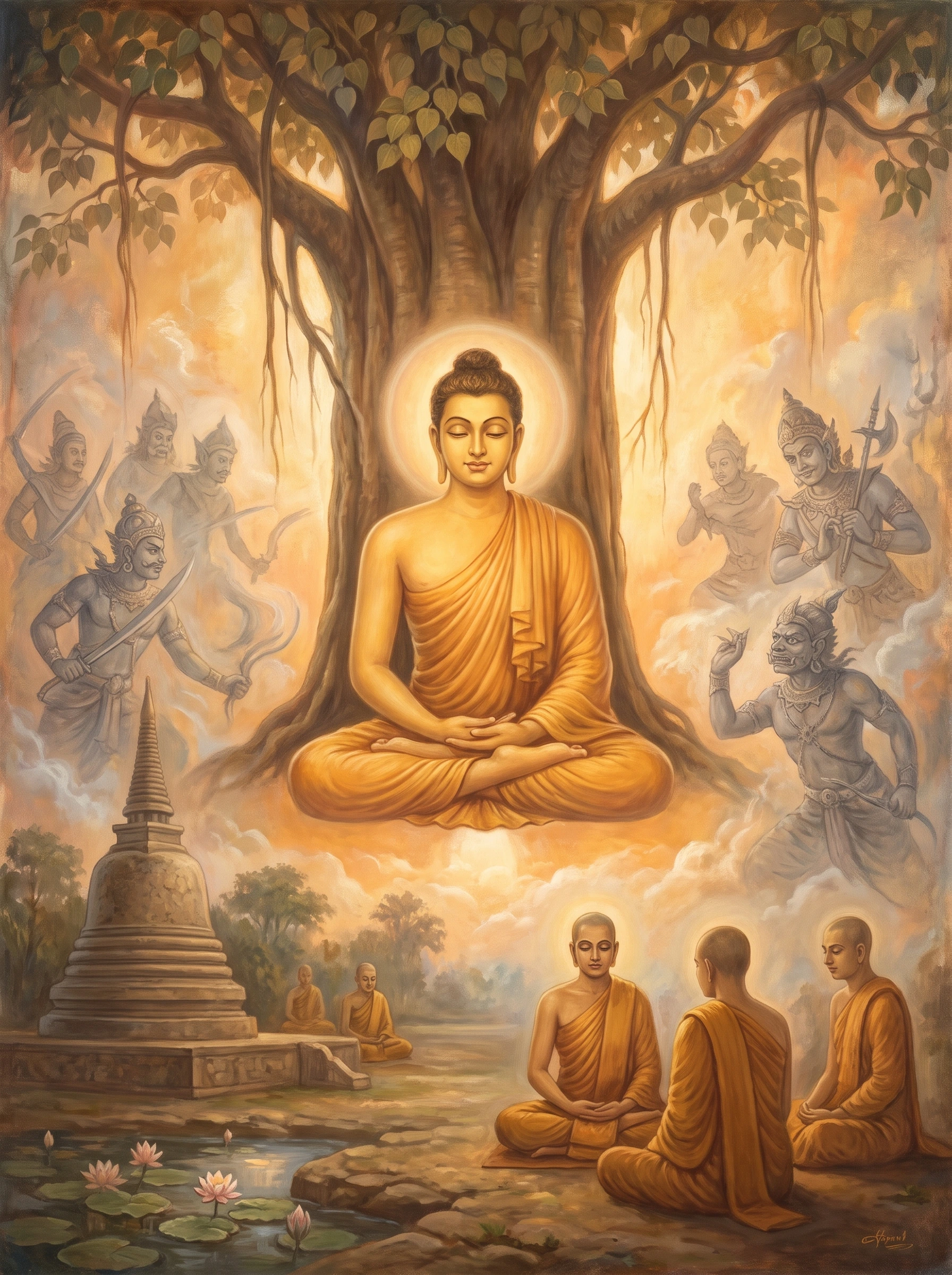
Better Than a Thousand
The Sahassa-vagga measures worth by depth, not quantity: better than a thousand hollow words is one that brings peace, and better than conquering a thousand thousand men in battle is the conquest of oneself — the victory no one can undo.
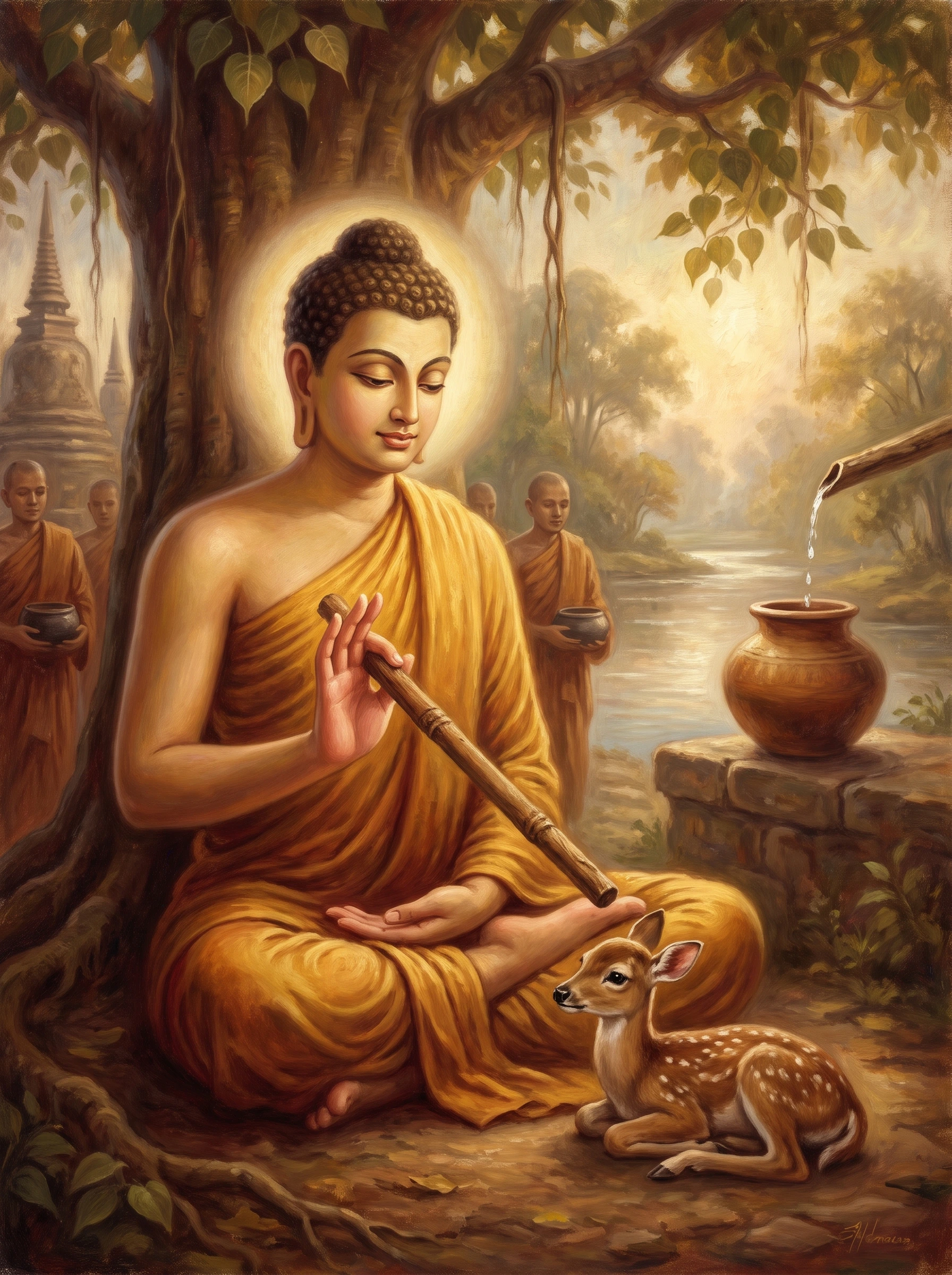
Evil and the Rod
The Papa-vagga on wrongdoing warns not to make light of small evil — drop by drop the water-jar is filled — while the Danda-vagga on the rod teaches that all beings tremble at violence and love their life; seeing yourself in others, do not strike or kill. Its warnings of hell echo the Niraya-vagga on the destinies won by careless deeds.
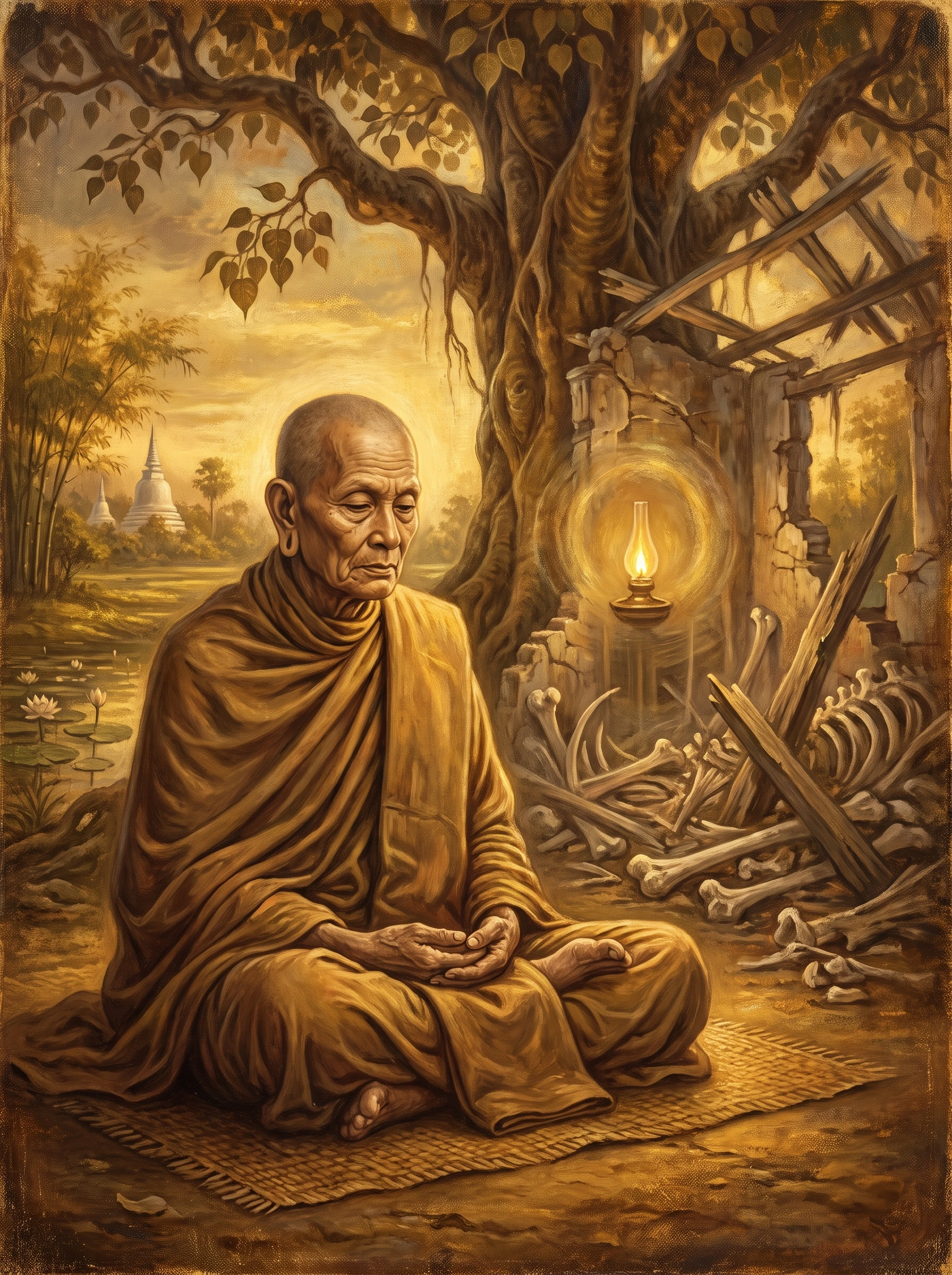
Old Age and the Self
The Jara-vagga on old age looks on the body as a painted puppet, a decaying house whose builder — craving — is at last found out, and the Atta-vagga on the self urges each person to guard and master themselves first, for one is one's own refuge and one's own worst foe.
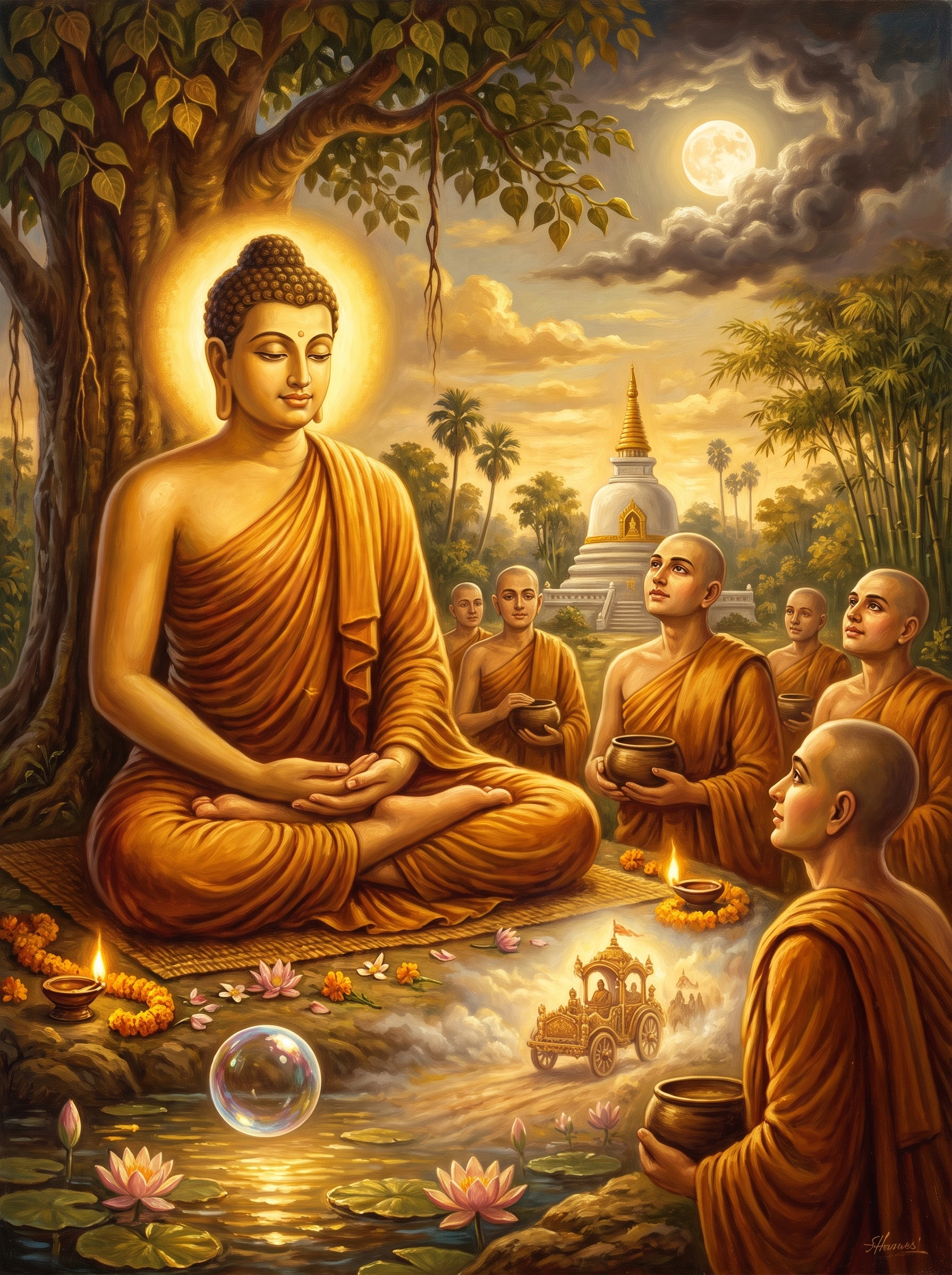
The World and Happiness
The Loka-vagga bids us rise above the world as a bird leaves a net, not living heedlessly nor chasing what is false, while the Sukha-vagga on happiness finds true joy in living without hatred amid the hateful, without illness amid the sick — for health is the highest gain and Nibbana the highest bliss.
Affection and Anger
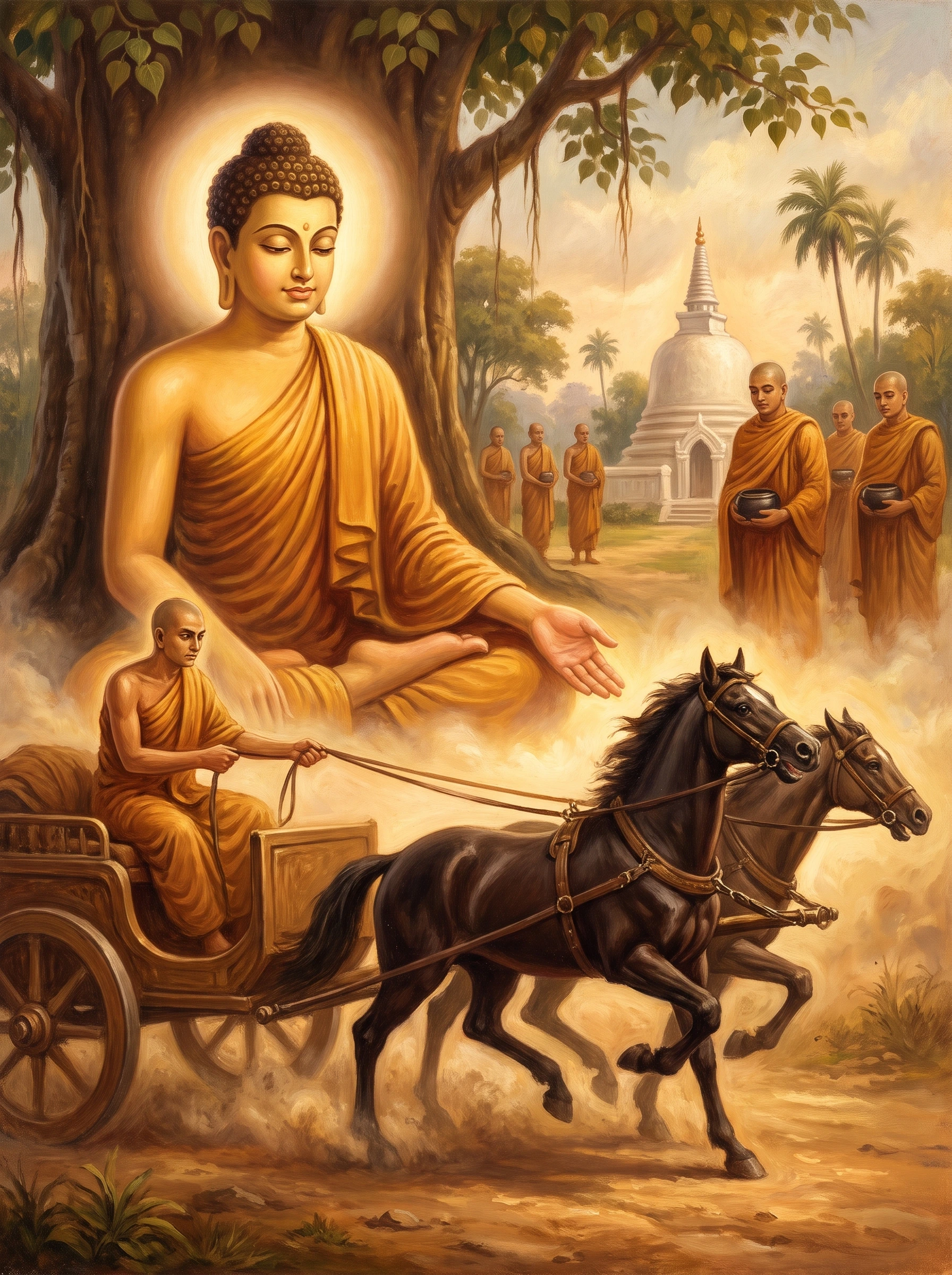
The Piya-vagga on affection warns that from what is dear springs grief and fear, so the free heart holds nothing too tightly, and the Kodha-vagga on anger counsels conquering wrath with love, the liar with truth, and the miser with giving: speak the truth, give not way to anger.
Impurity and Craving
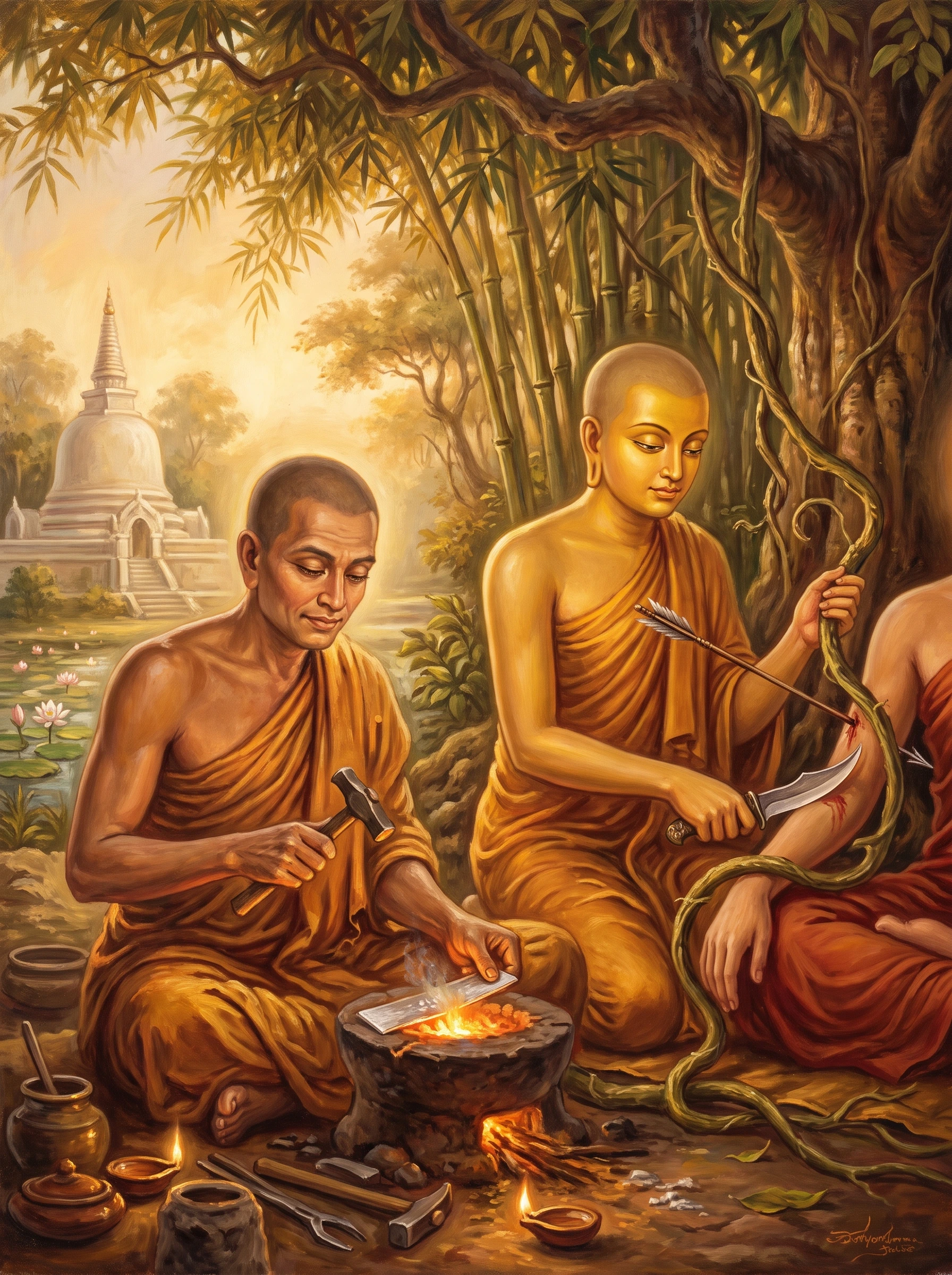
The Mala-vagga on impurity names the true stains — not of dust but of ignorance and heedlessness — and the Tanha-vagga on craving traces the thirst that binds us to rebirth, creeping like a vine; cut it at the root, says the Buddha, and you will not sorrow again.
The Path and the True Brahmin
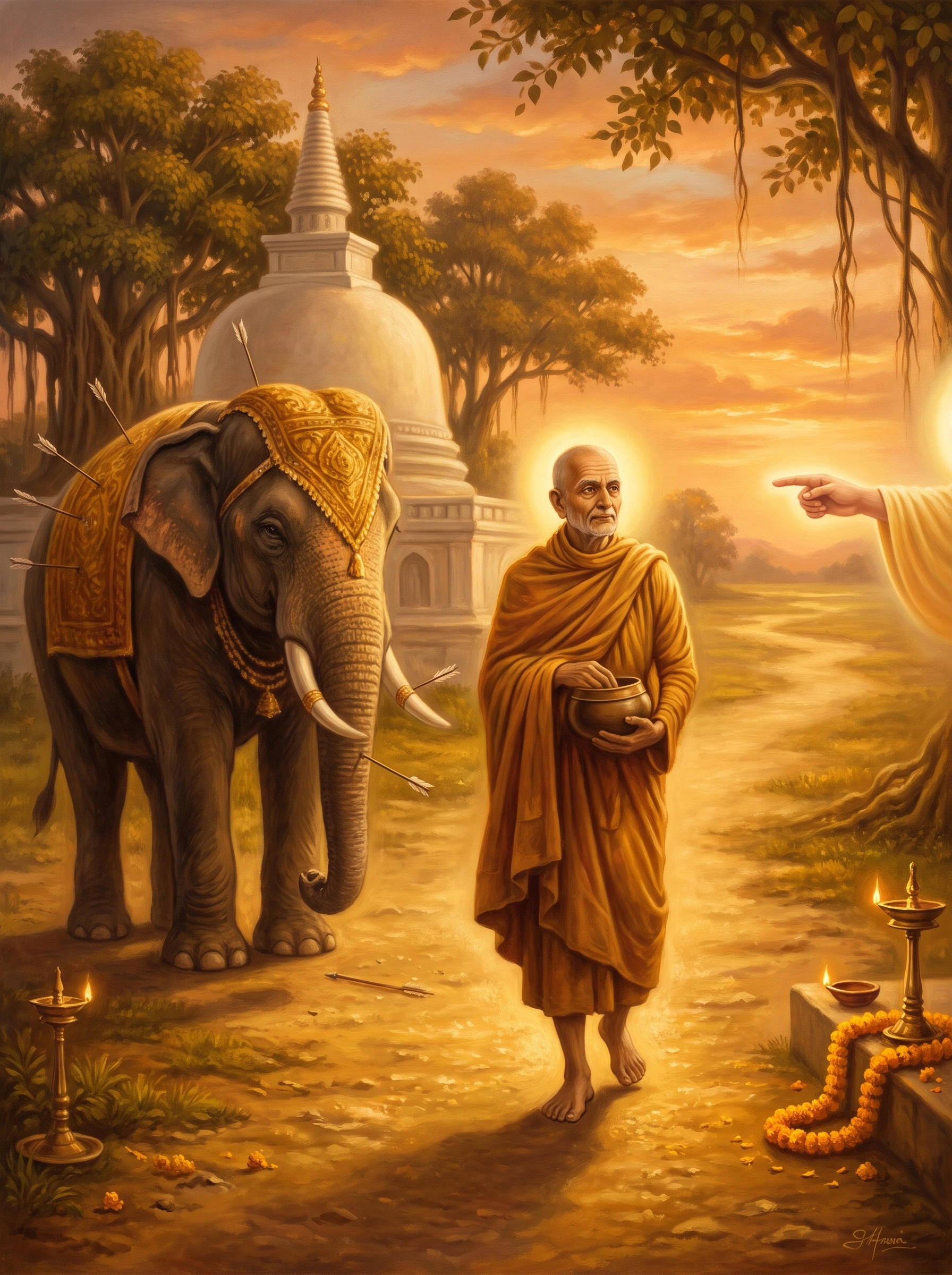
The closing vaggas set out the way and its goal: the Magga-vagga on the Noble Eightfold Path — best of paths, the only way to purity — the Bhikkhu-vagga on the disciplined monk, and the Brahmana-vagga which redefines the true brahmin not by birth but by conduct, patience, and freedom from clinging. Along the way stand the Naga-vagga's image of the elephant enduring insult and the Dhammattha-vagga's portrait of the truly just.