The Life of Mahavira
The life of Vardhamana Mahavira — prince, ascetic, and awakened teacher — and the making of the Jain path of nonviolence, drawn from the Kalpa Sutra.
Short on Time?
The Life of Mahavira in One Sitting
The Line of the Tirthankaras
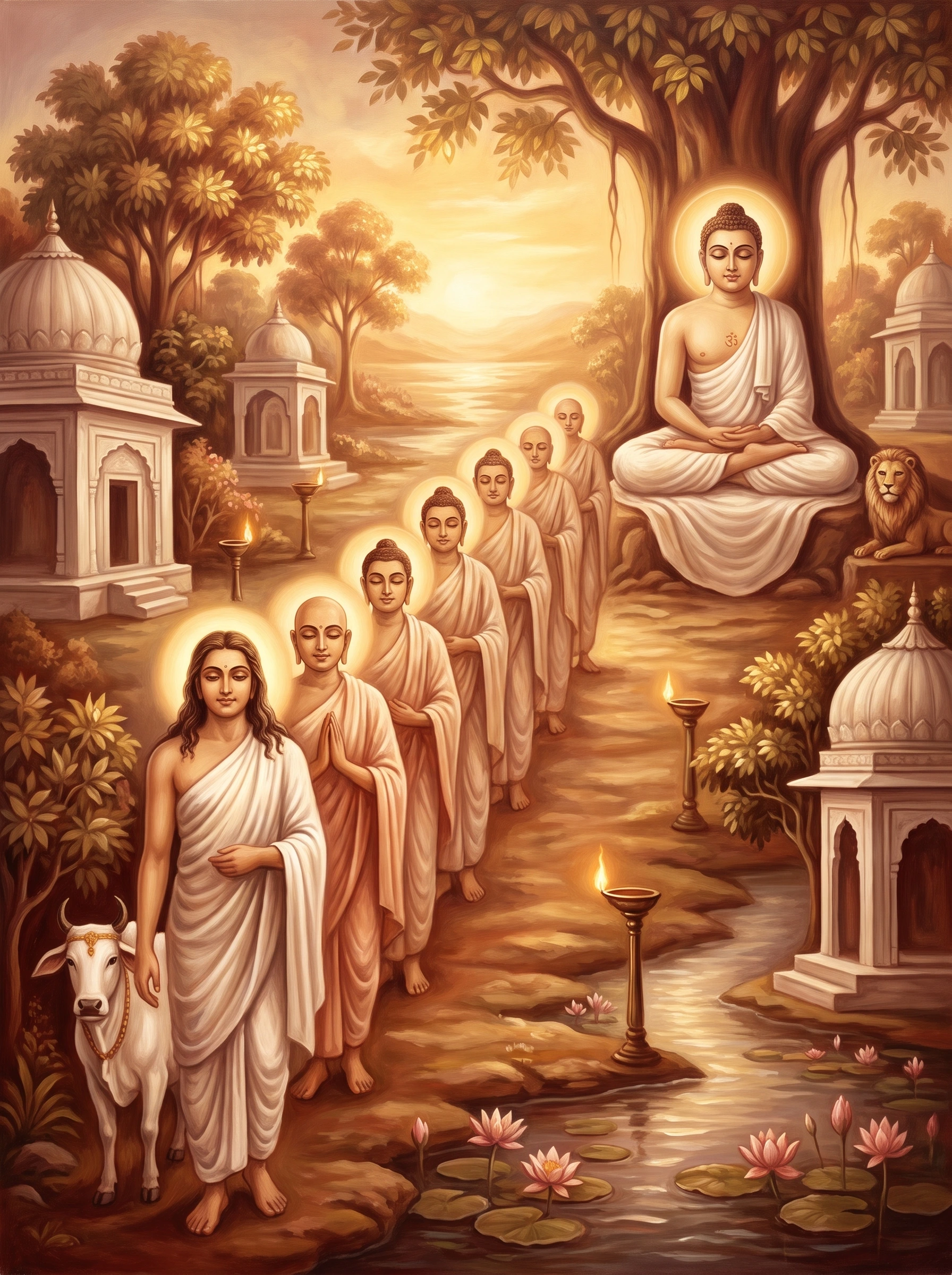
Jain tradition tells of twenty-four Tirthankaras, the ford-makers who each rediscover and proclaim the eternal path across the ocean of rebirth, from Rishabha the first to Parshvanatha the twenty-third, with Mahavira as the twenty-fourth and last of the present age.
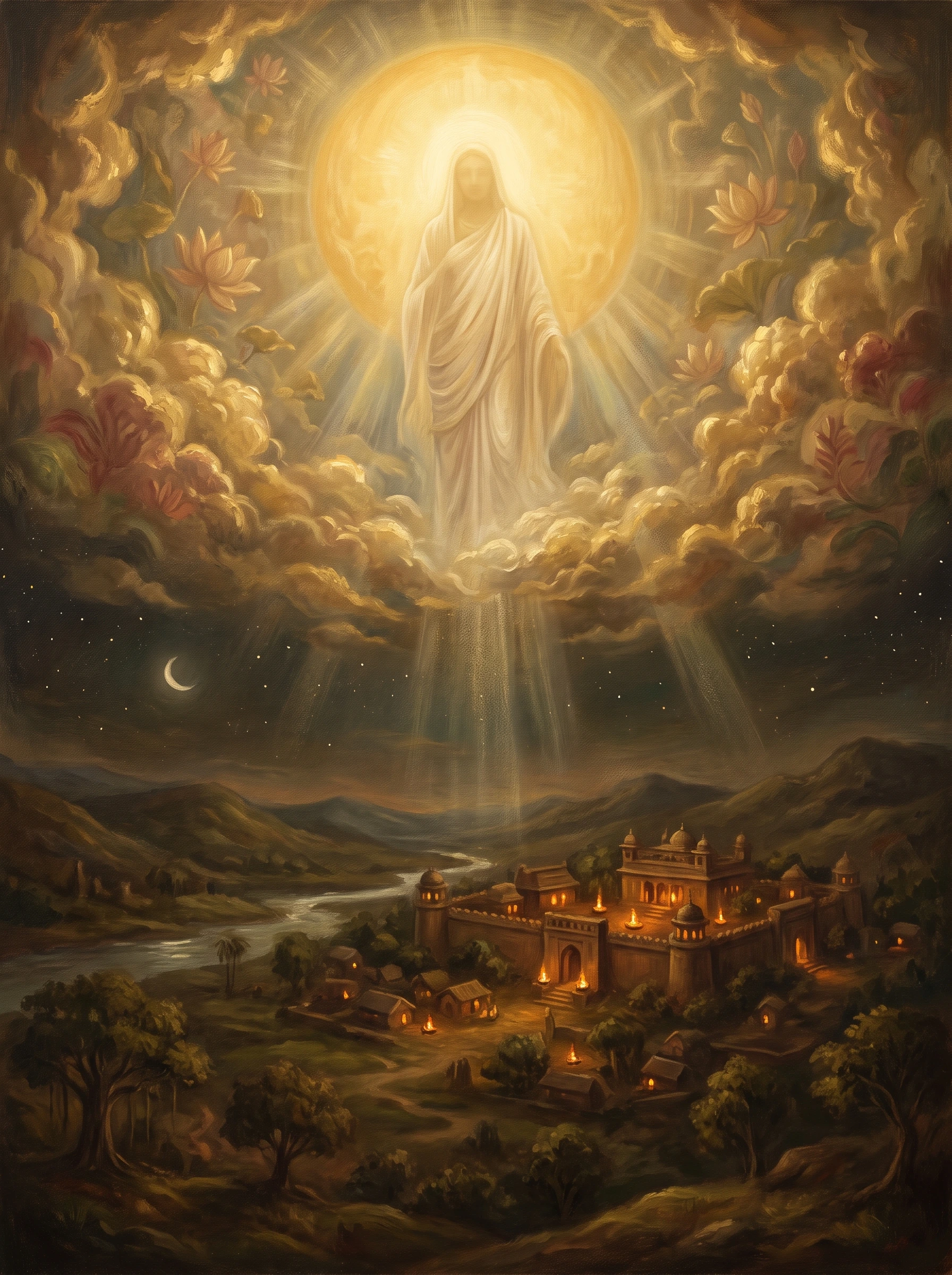
The Descent of the Soul
The Kalpa Sutra recounts the descent of the soul that would become Mahavira from the heavenly realm to take its final human birth, an event marked in Jain tradition as one of the five auspicious moments (kalyanakas) of a Tirthankara's life.
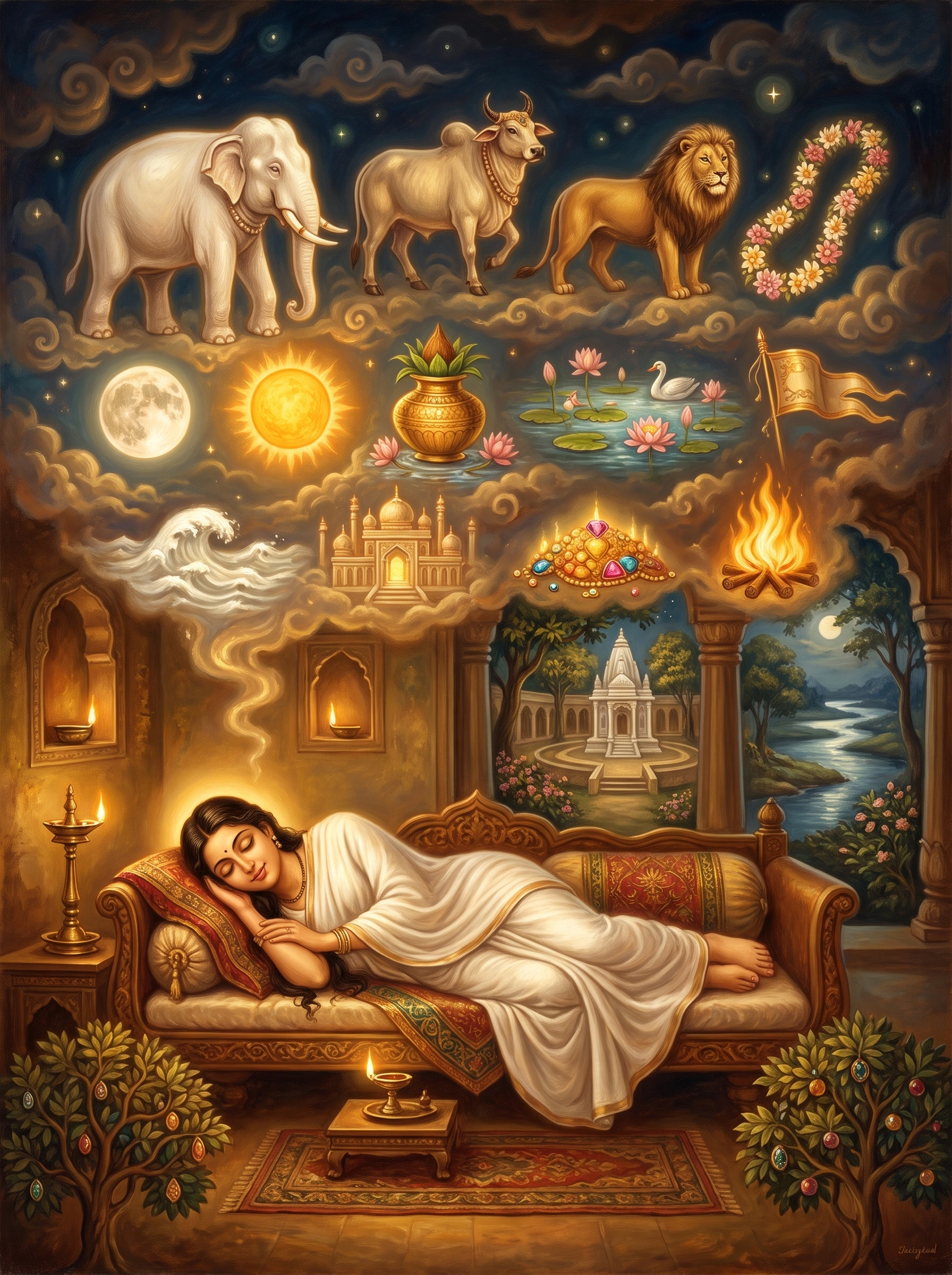
The Fourteen Dreams
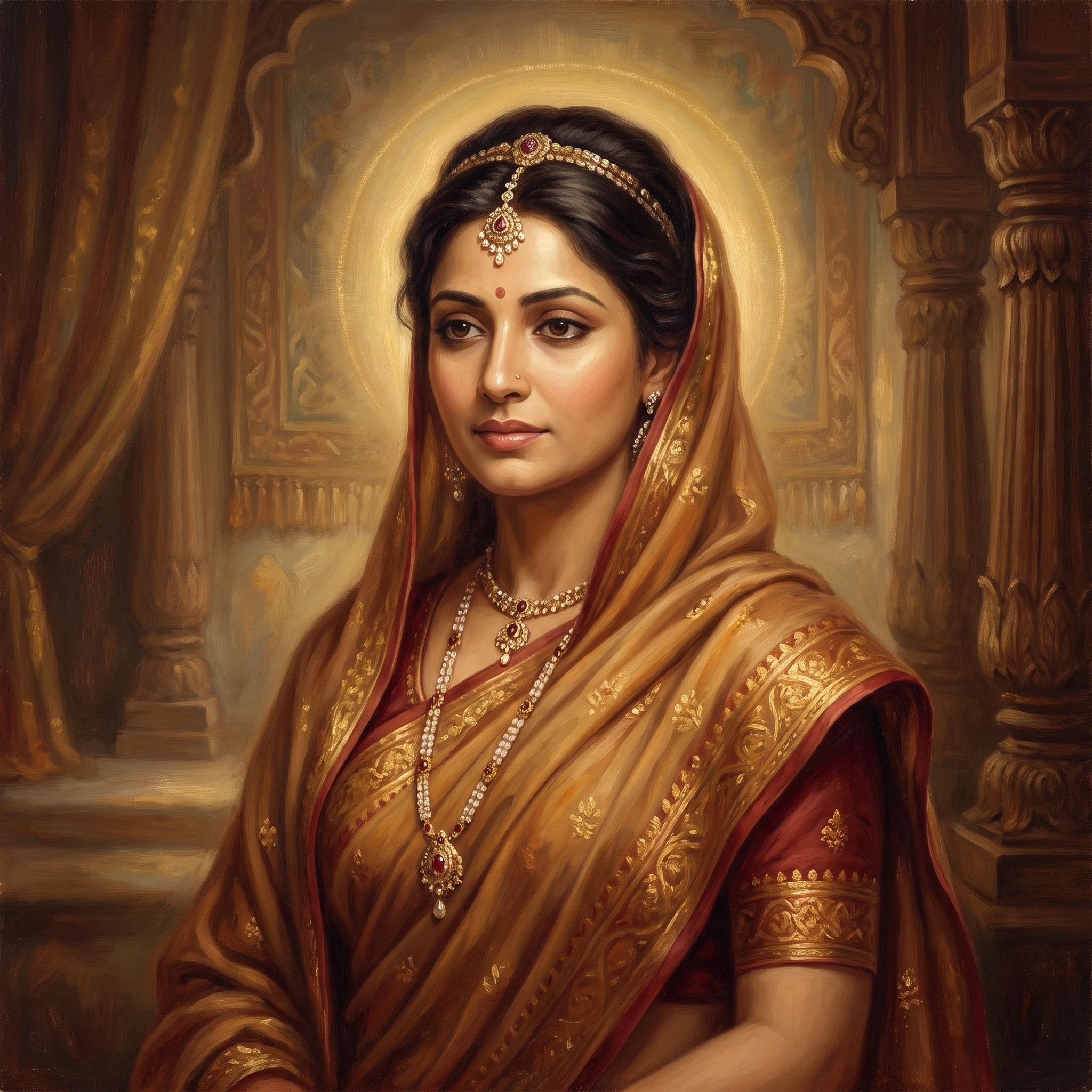
The Kalpa Sutra tells how Queen Trishala beheld a series of great and auspicious dreams — including a white elephant, a lion, and the moon — which the interpreters foretold as signs that she would bear a son destined to become either a universal emperor or a supreme spiritual teacher.
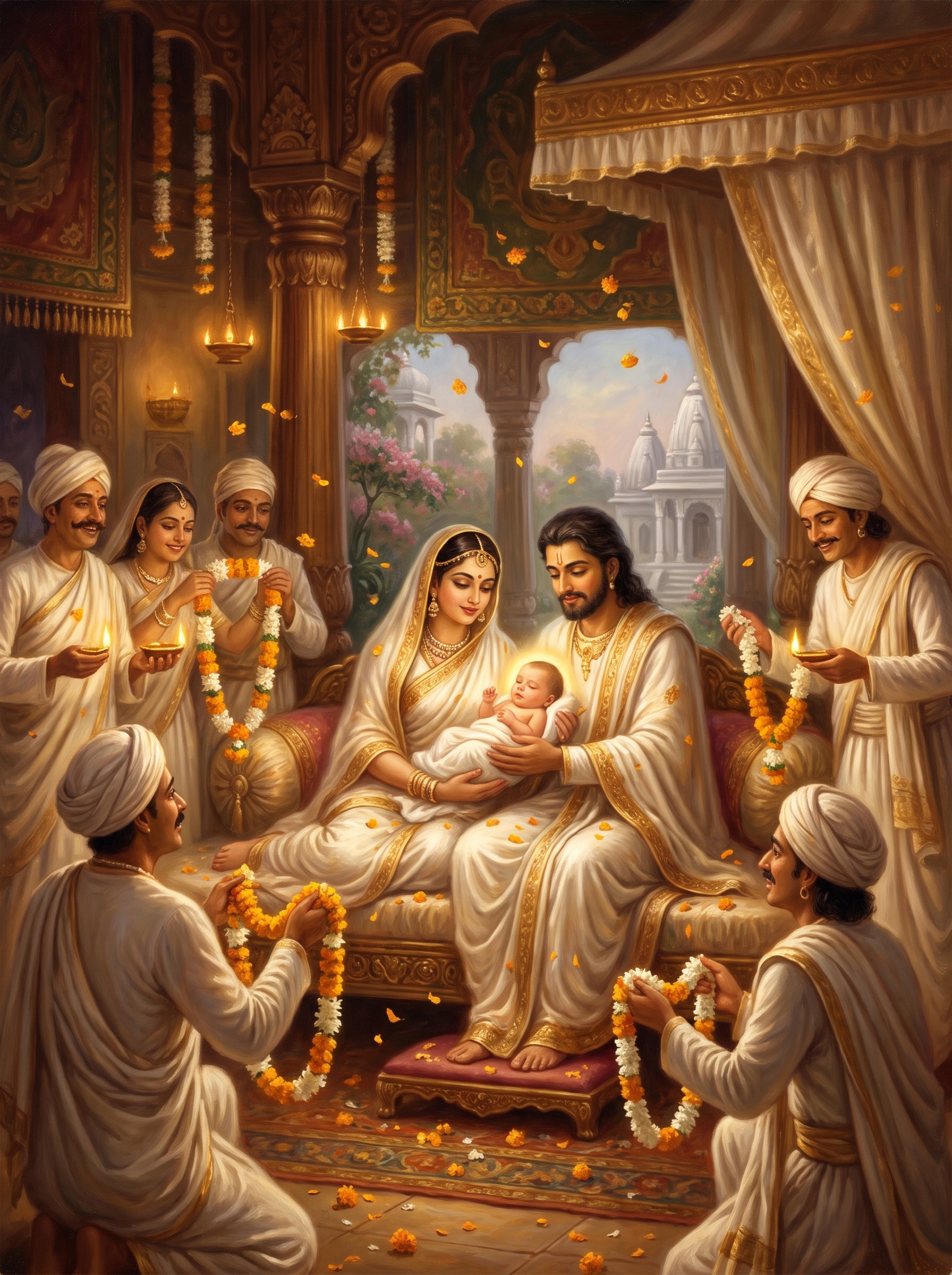
The Birth of Vardhamana
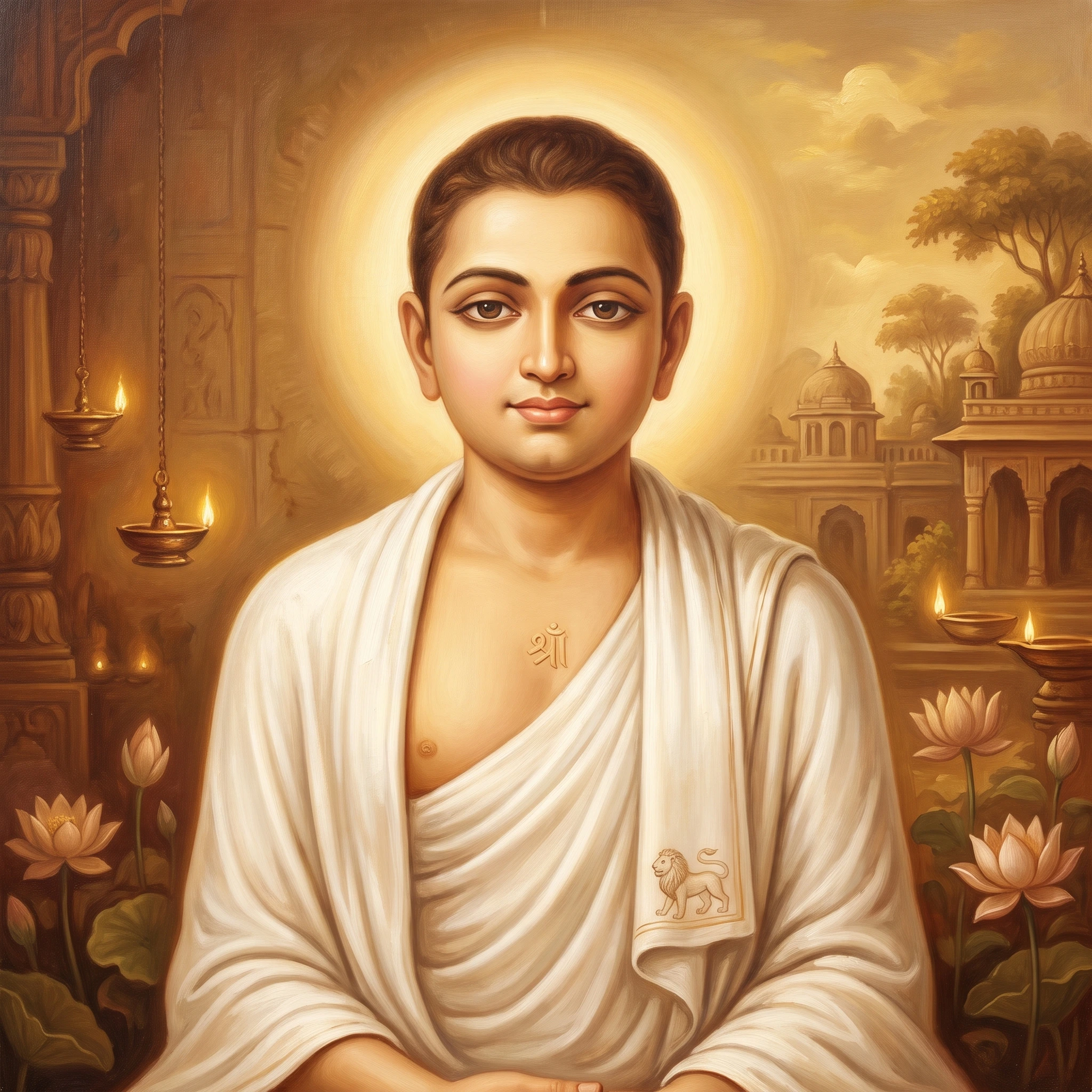
The child was born at Kundagrama to King Siddhartha and Queen Trishala of the Jnatrika clan, and because the kingdom's prosperity is said to have grown from the time of his conception, he was named Vardhamana, meaning 'the one who increases.'
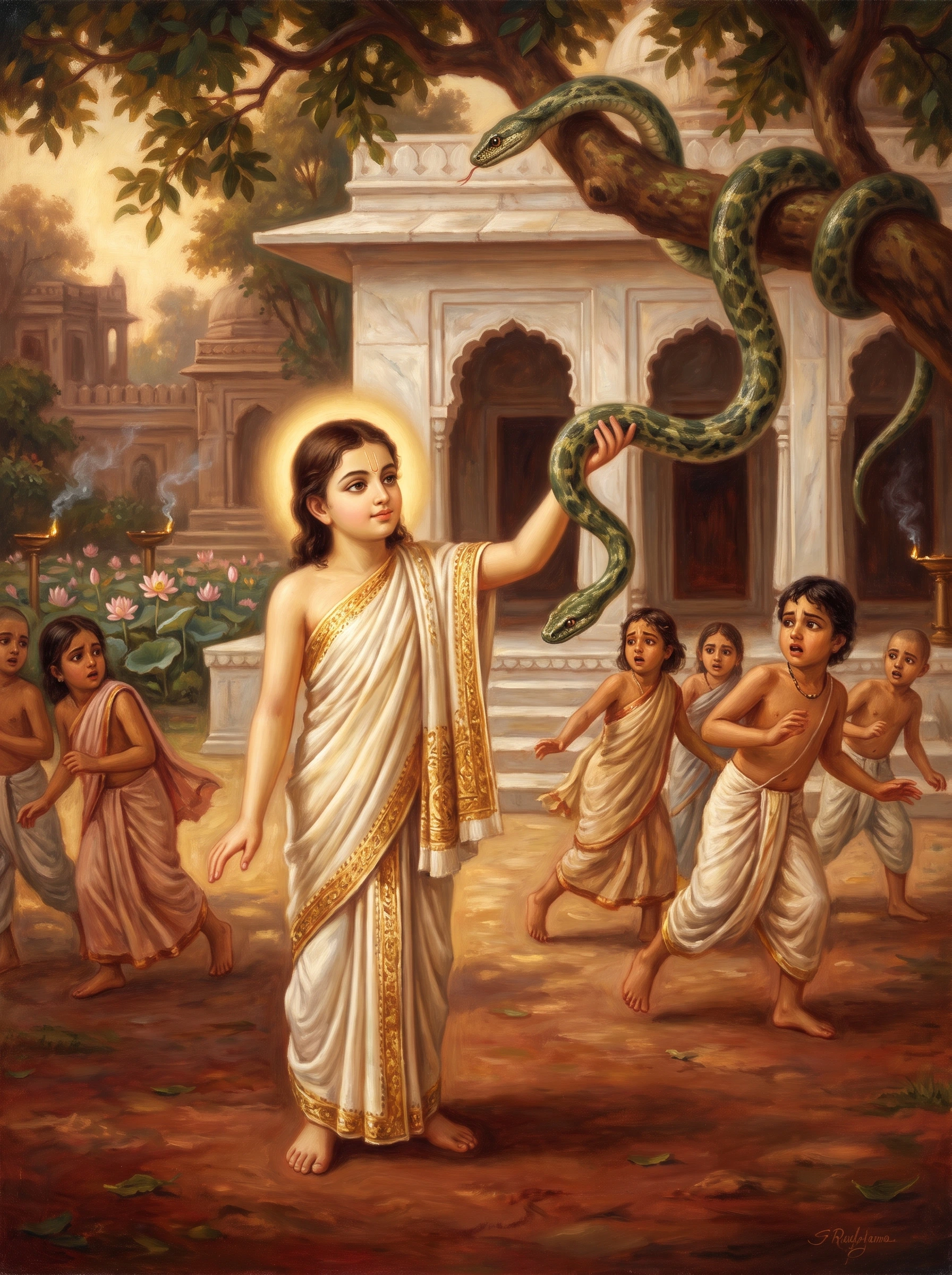
The Prince Vardhamana
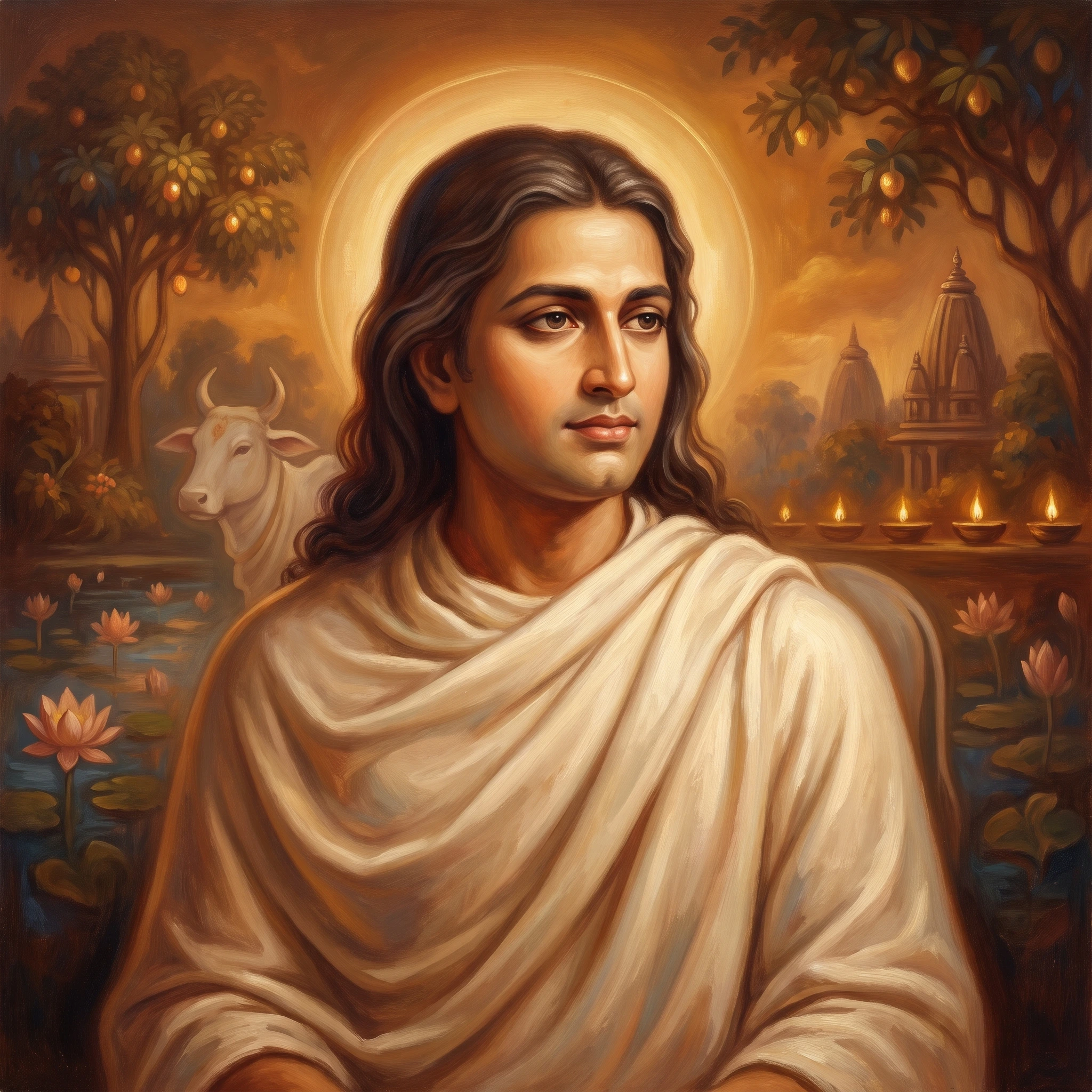
Raised in the comfort of a royal household, Vardhamana grew to manhood amid the pleasures and duties of palace life, yet Jain tradition remembers in him a deepening detachment and inward turning even as he lived among worldly things.
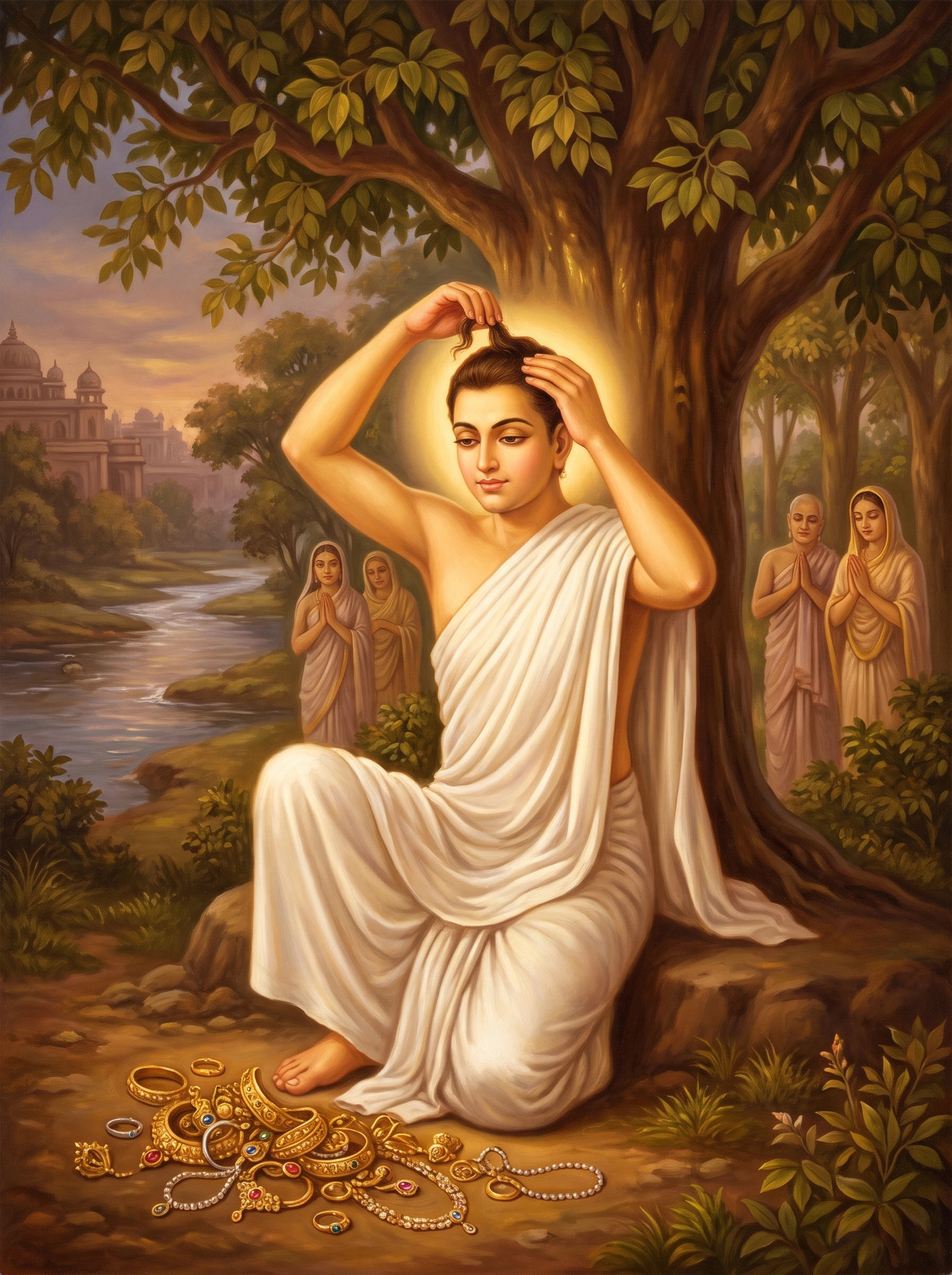
The Great Renunciation
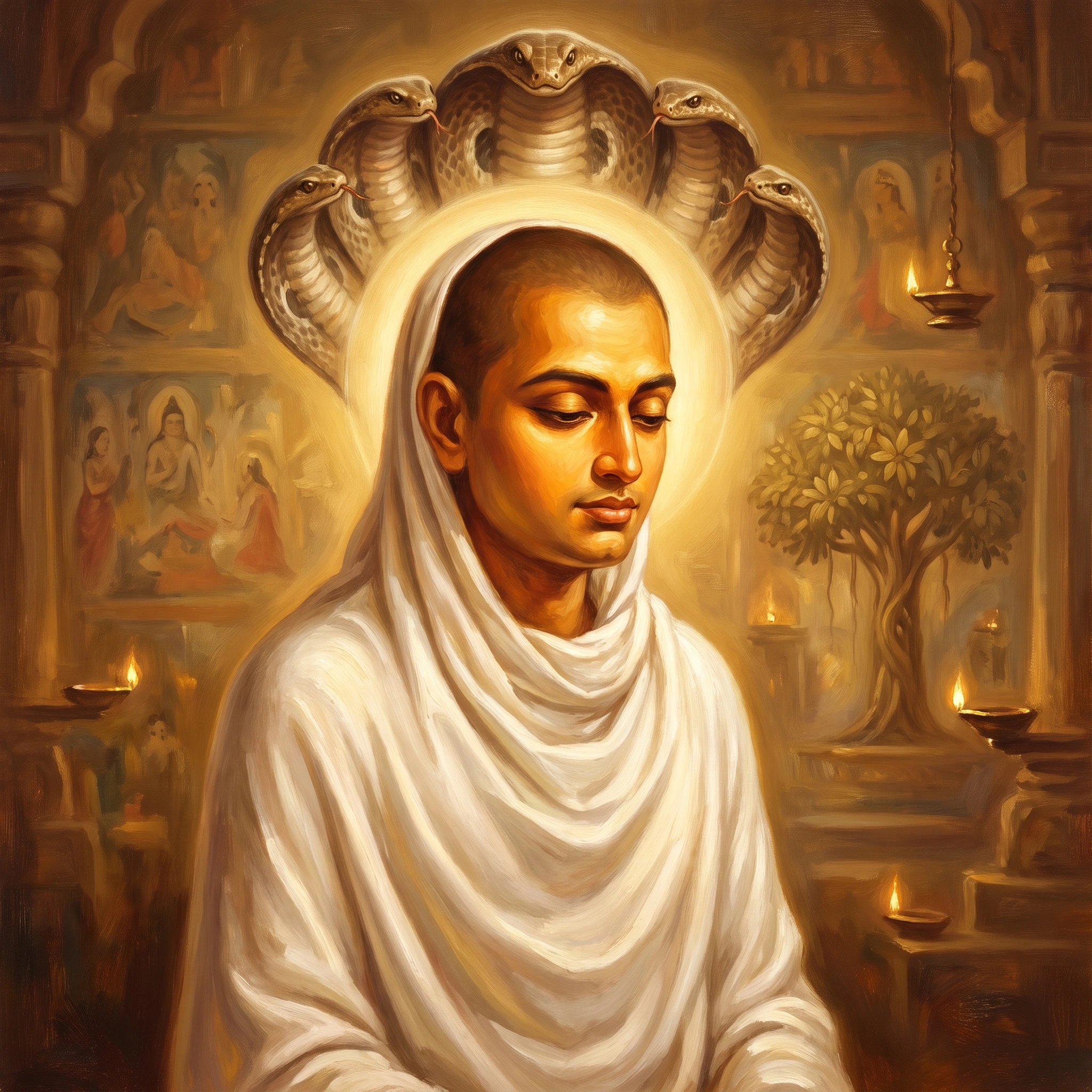
At about the age of thirty Vardhamana renounced the world, giving away his wealth, plucking out his hair in the traditional gesture of a Jain ascetic, and taking the vow of homelessness to seek liberation as a wandering mendicant.
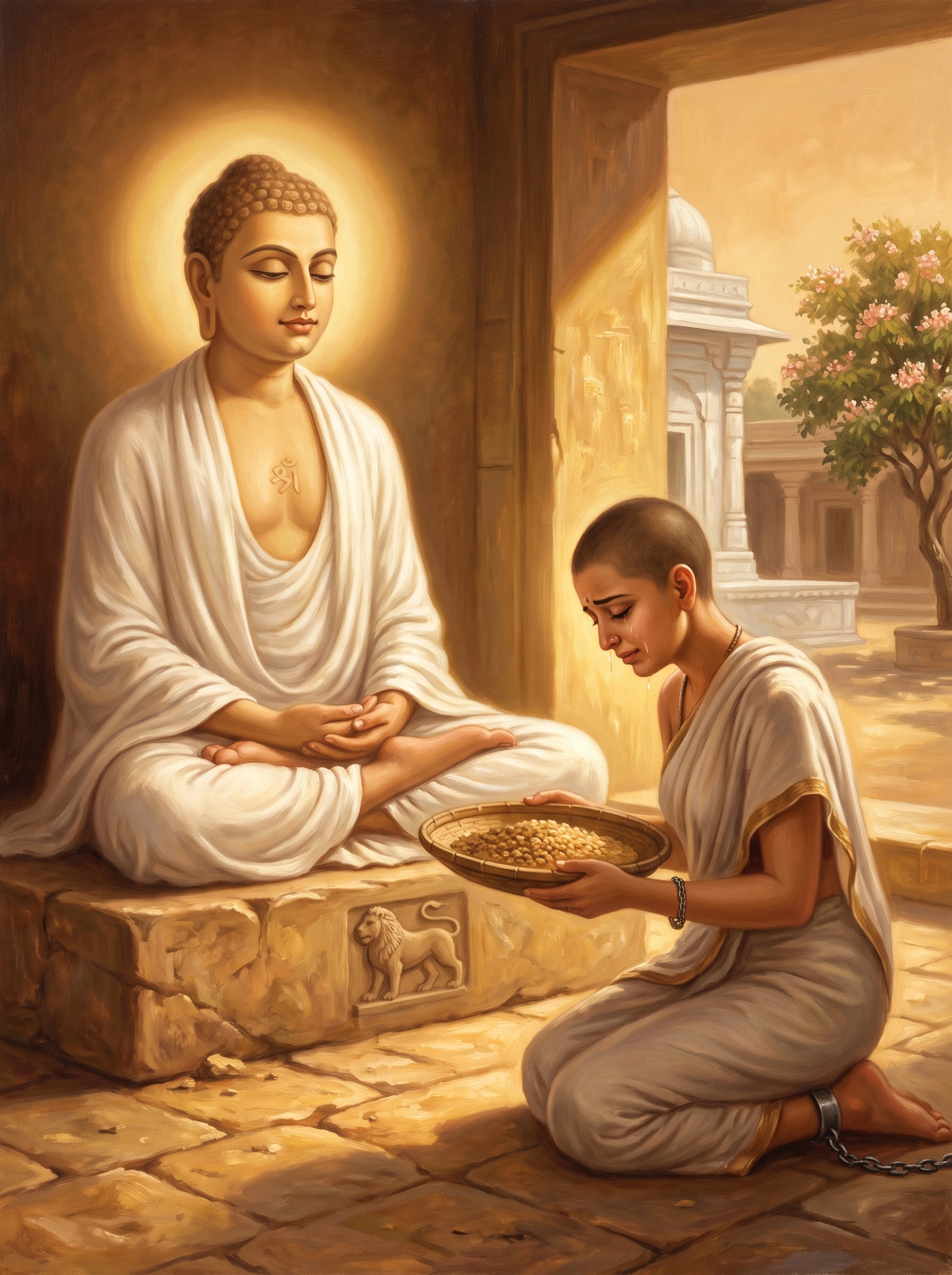
Twelve Years of Silence
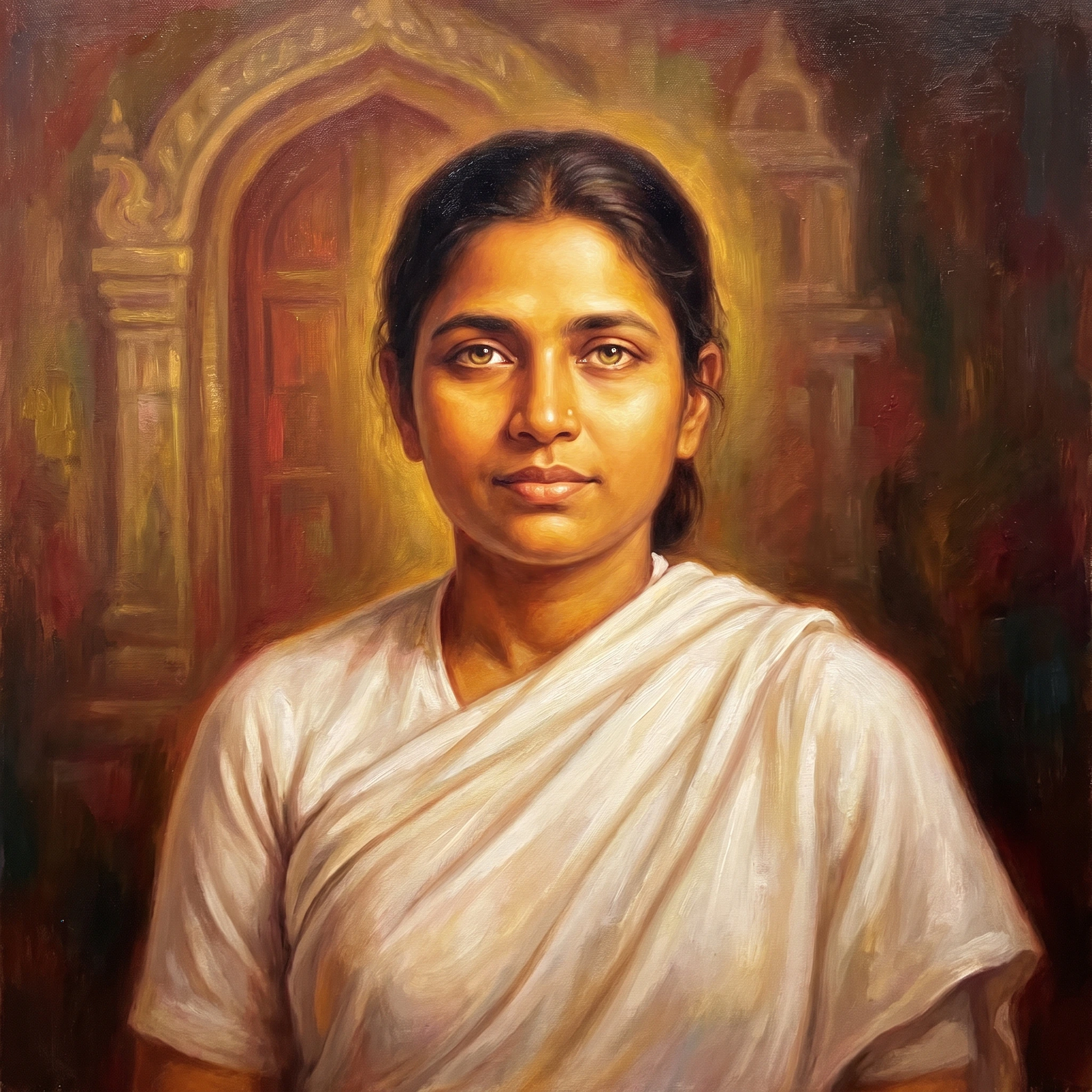
For some twelve years Mahavira wandered as a naked ascetic in deep silence and meditation, bearing hardship and hostility with equanimity, and Jain tradition recalls his acceptance of alms from the devoted Chandanabala among the trials of this long austerity.
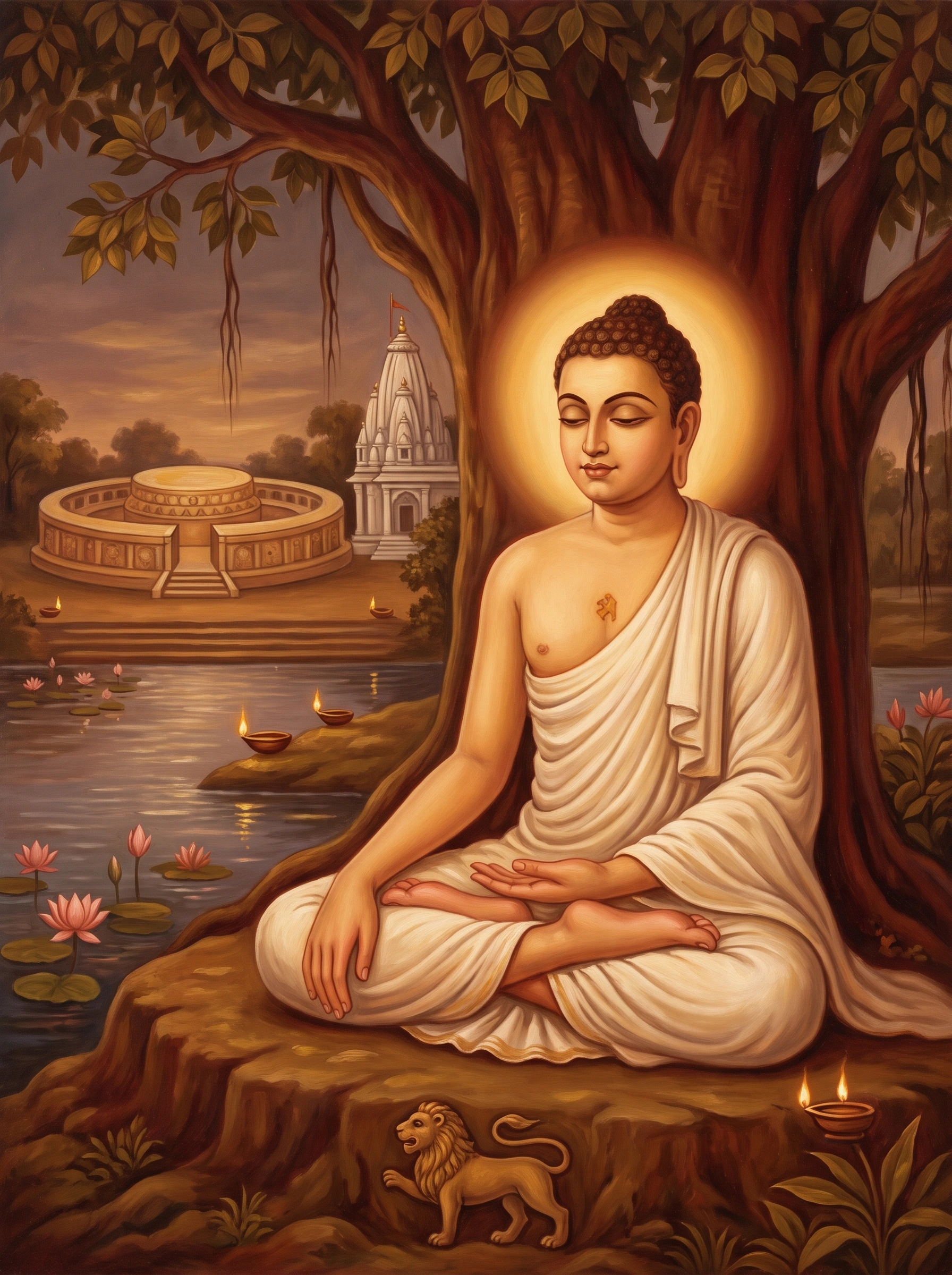
Kevala-Jnana: The Awakening
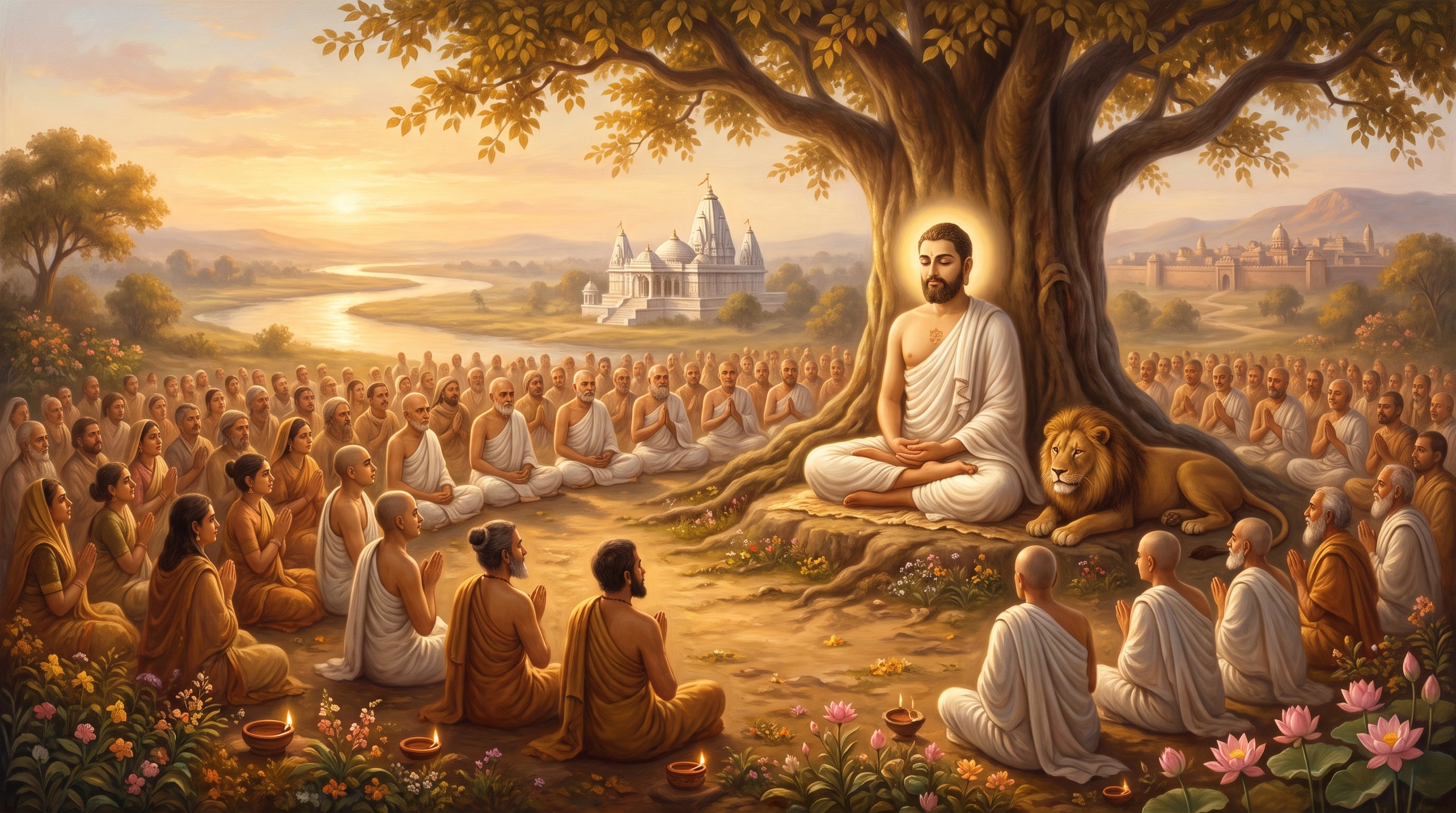
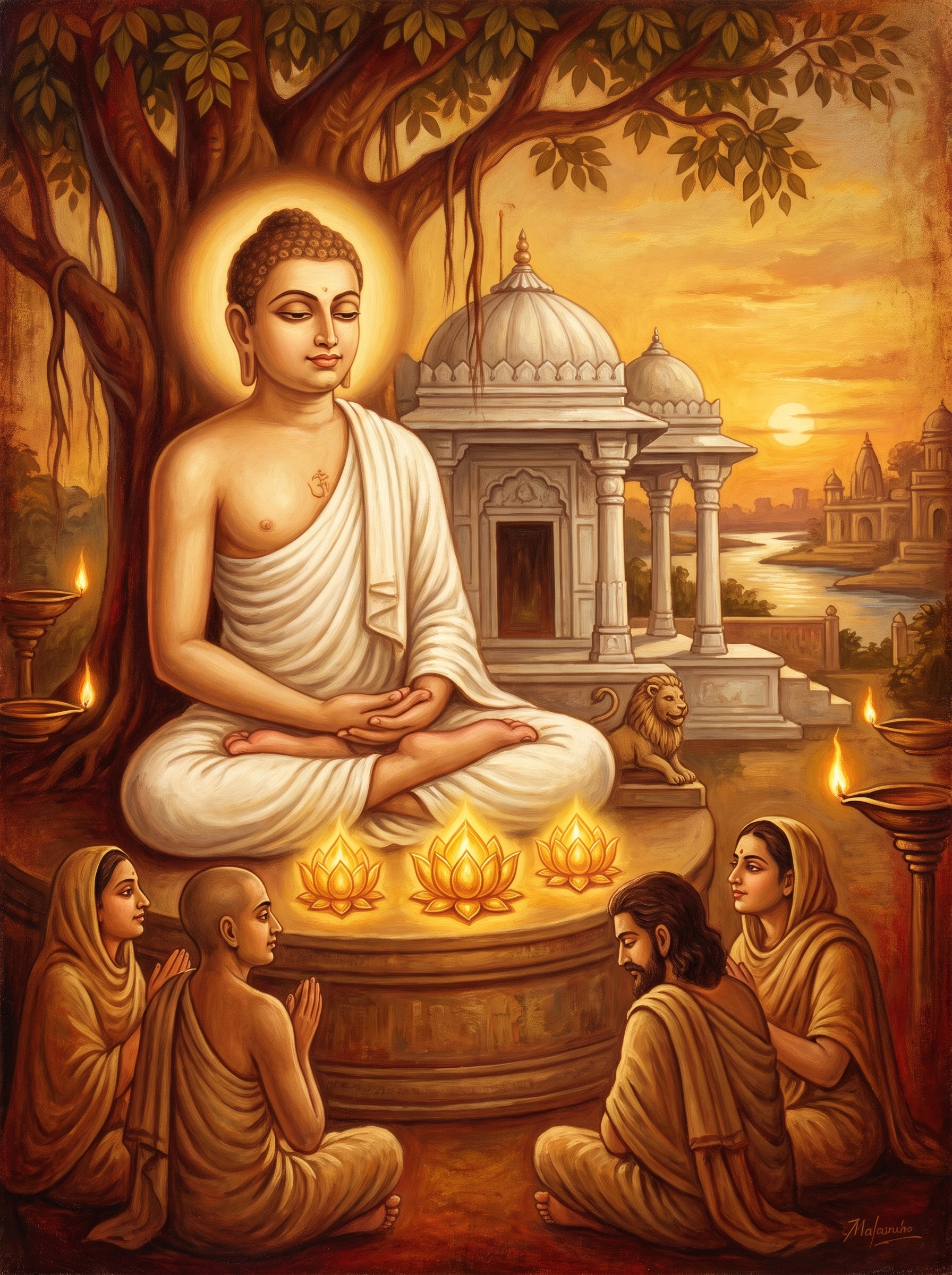
After twelve years of austerity, seated in meditation beneath a sala tree on the bank of the Rijupalika river, Mahavira attained kevala-jnana, the infinite and omniscient knowledge that marks a soul as a fully awakened Jina, a conqueror of the cycle of rebirth.
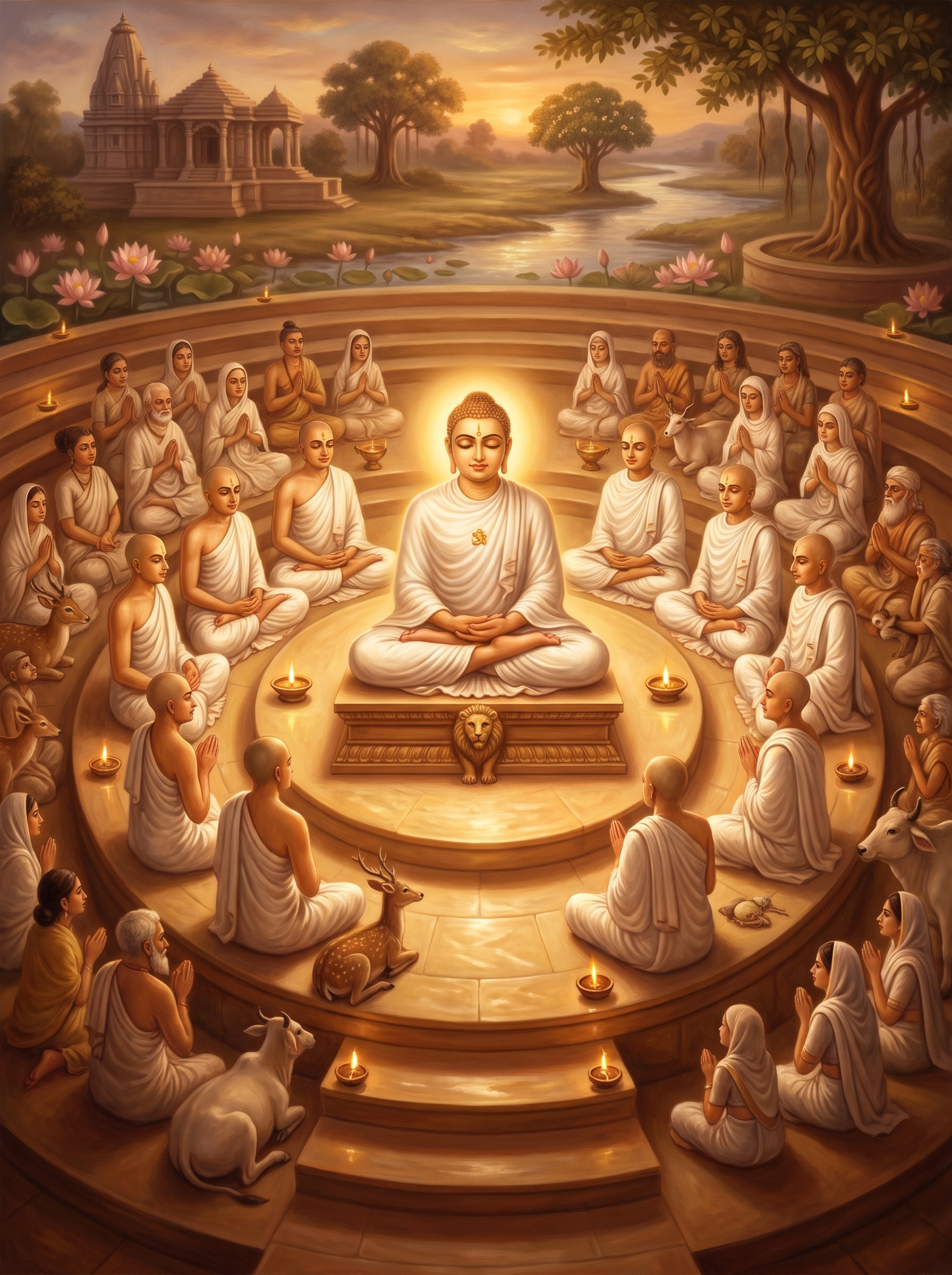
The Ganadharas and the Sangha
Mahavira gathered eleven chief disciples, the ganadharas, foremost among them the learned brahmin Indrabhuti Gautama, and organized his followers into the fourfold community (sangha) of monks, nuns, laymen, and laywomen.
The Three Jewels
Mahavira taught the path of liberation as the Three Jewels — right faith, right knowledge, and right conduct — expressed through ahimsa (non-violence), the five great vows, aparigraha (non-attachment), and anekantavada, the doctrine of the many-sidedness of truth.
Nirvana at Pava
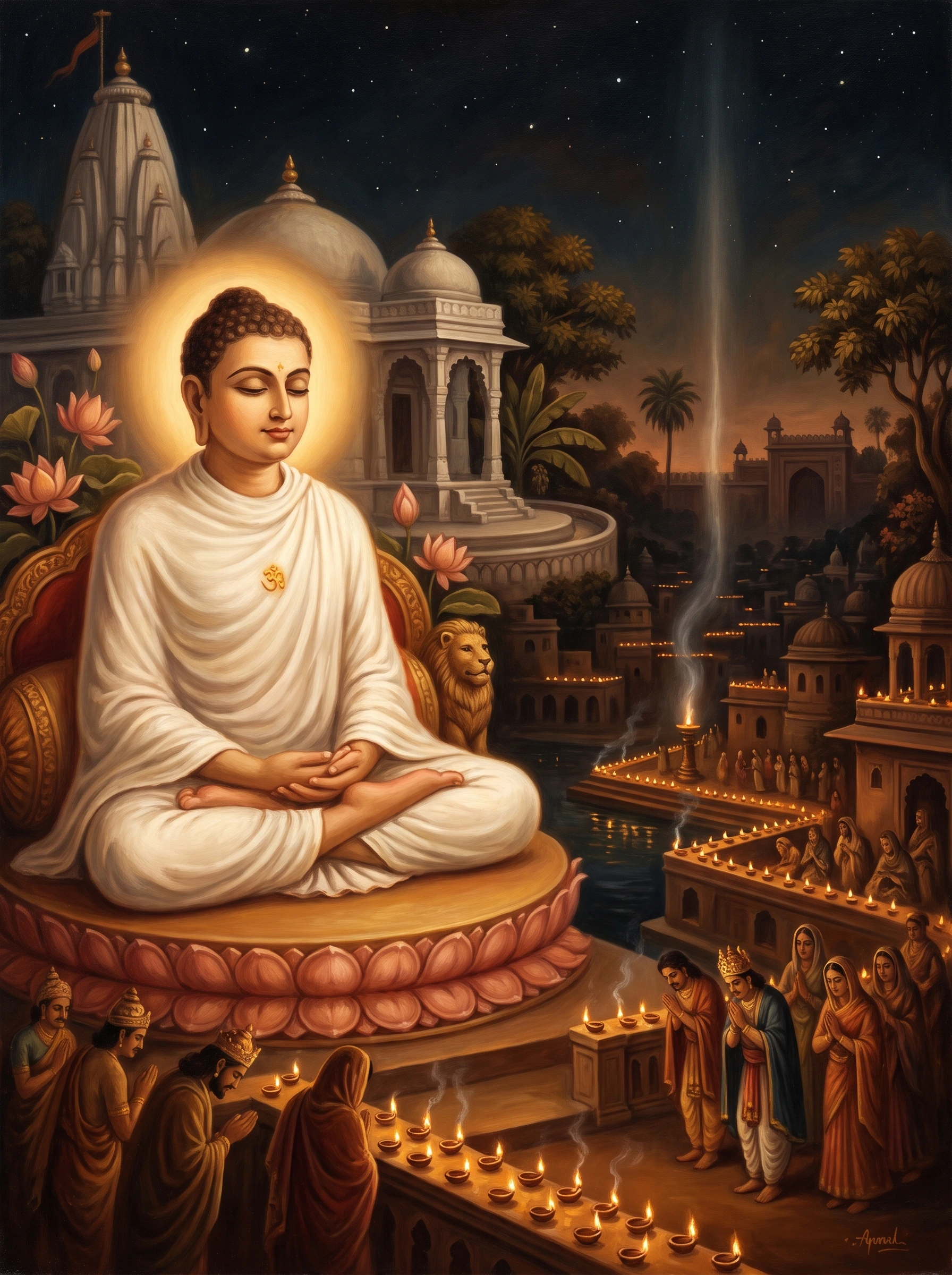
In his seventy-second year Mahavira attained nirvana, final liberation from the cycle of rebirth, at Pavapuri; Jain tradition holds that the lamps lit by the assembled kings to honour his passing are remembered in the festival of Diwali, and his teaching endured through the community he had founded.