Abhang — Songs of the Warkari Saints
The great abhangs of Maharashtra’s Warkari saints — Dnyaneshwar, Namdev, Janabai, and Tukaram — devotional songs to Vitthal of Pandharpur, with transliteration and meaning.
Short on Time?
The Abhangs of Pandharpur in One Sitting
Vitthal of Pandharpur
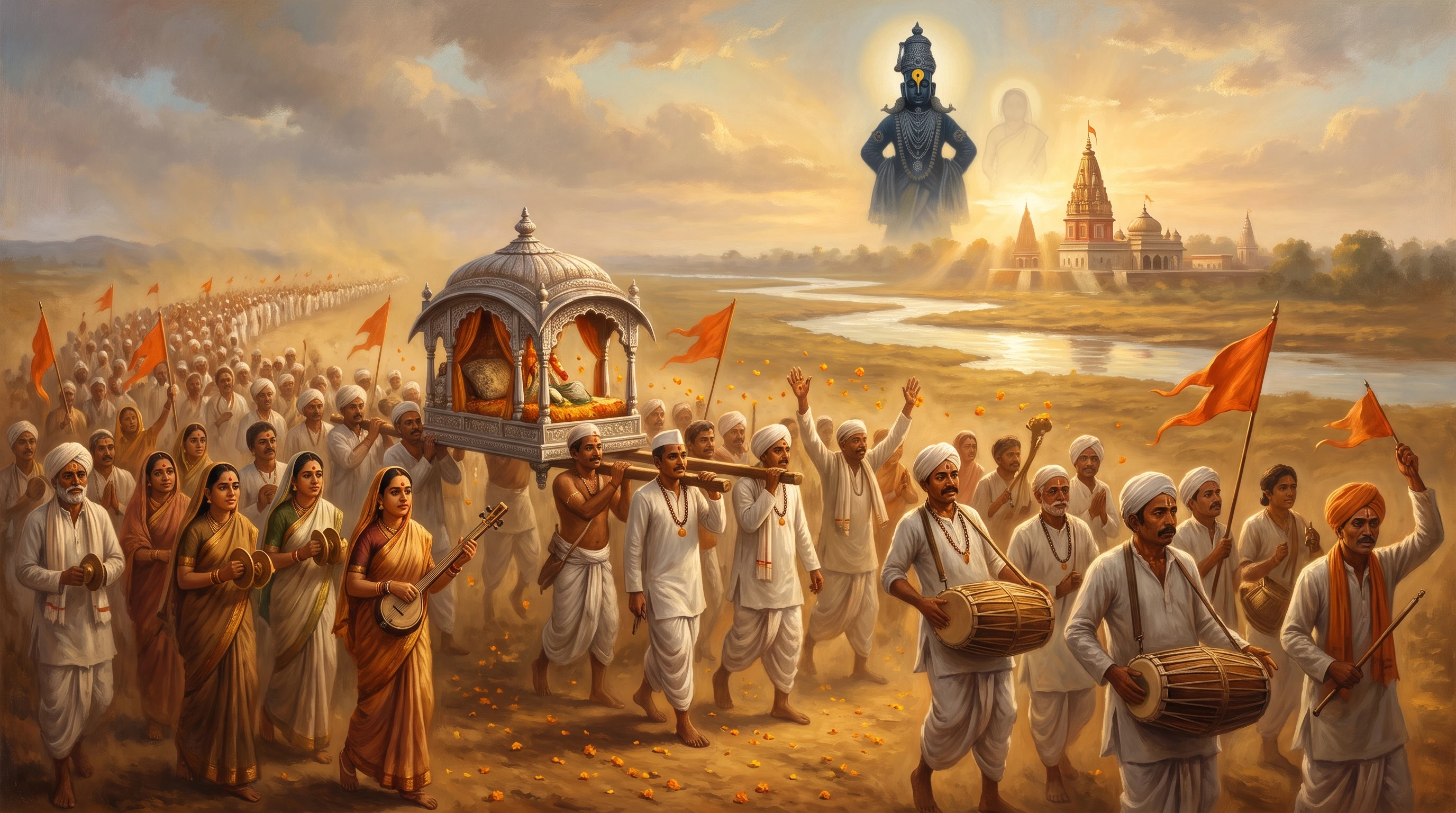
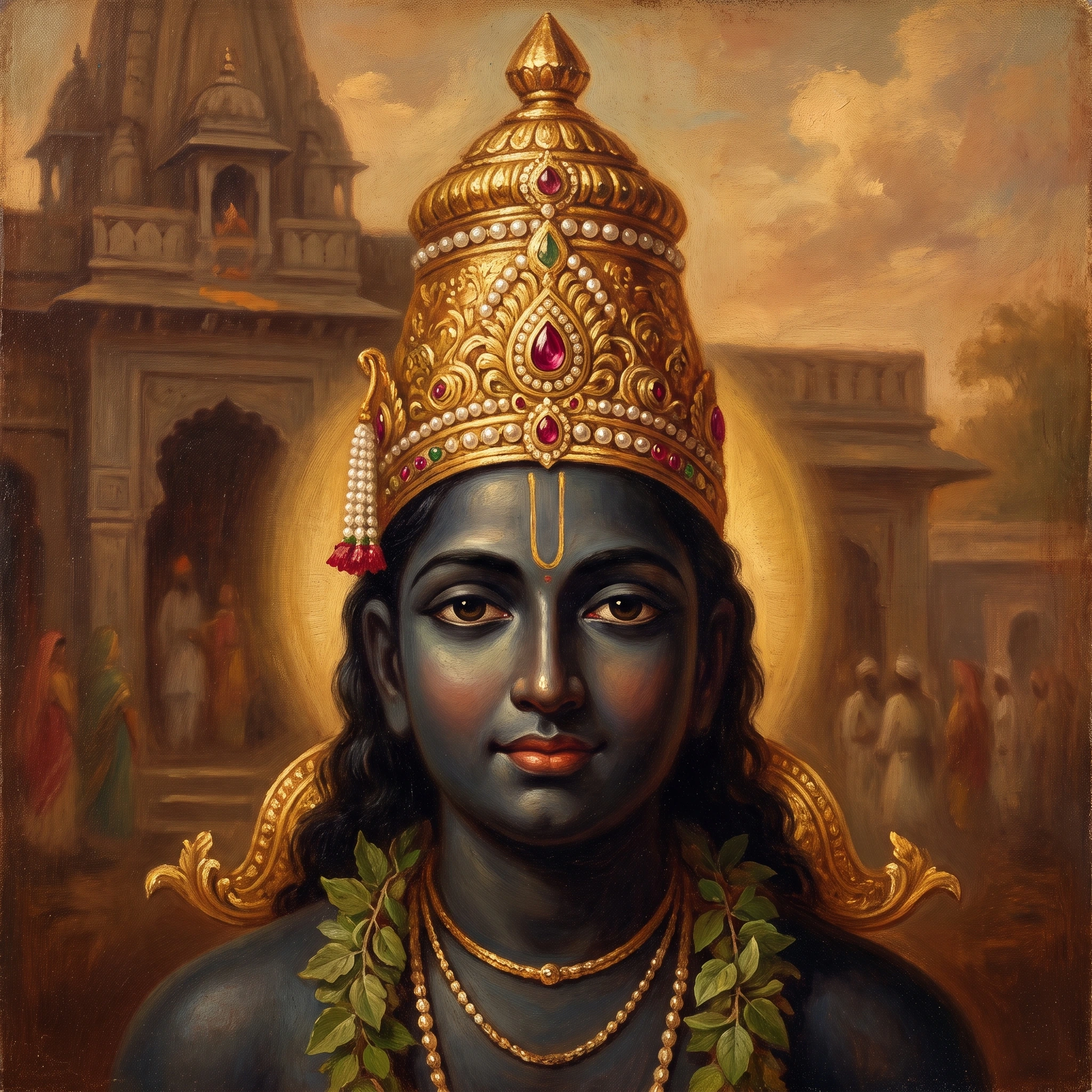
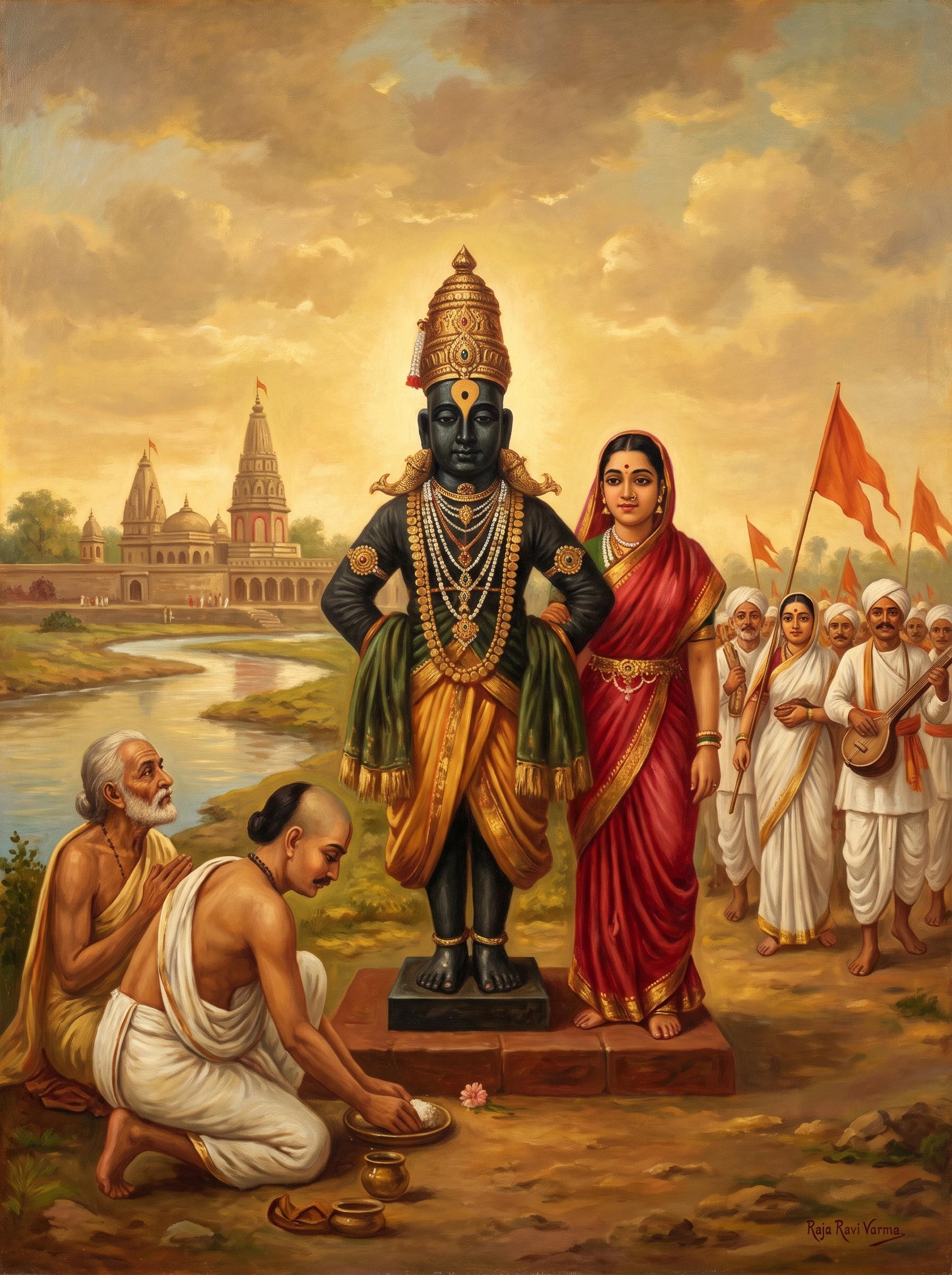
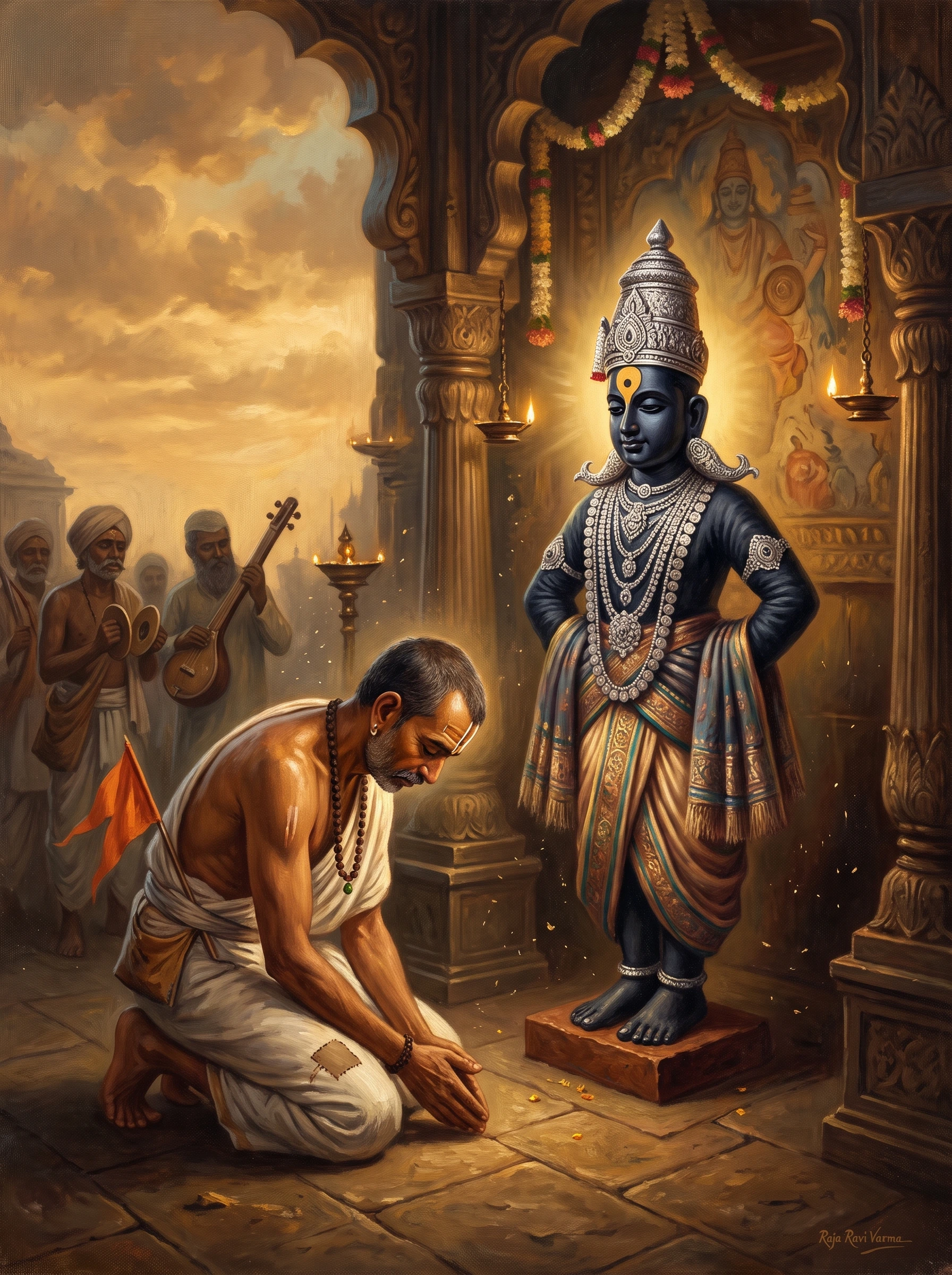
Vitthal, also called Vithoba or Pandurang, is the form of Vishnu-Krishna worshipped at Pandharpur on the Chandrabhaga river, depicted standing with hands on his hips upon a brick, and revered as the central deity of the Warkari devotional movement.
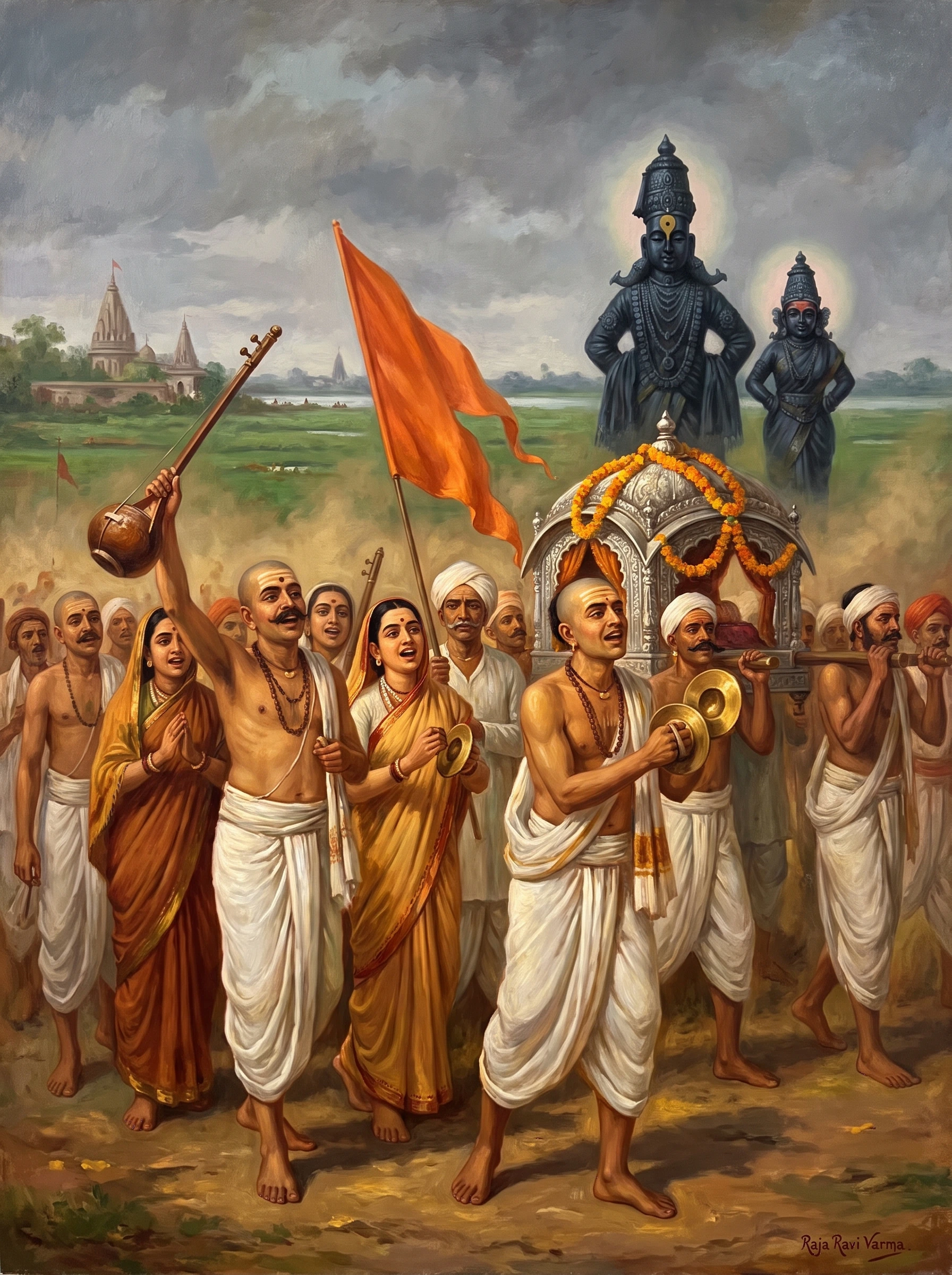
The Wari: A Pilgrimage of Song
The Wari is the recurring pilgrimage in which Warkaris walk to Pandharpur singing abhangs and carrying the palkhi (palanquin) bearing the padukas of the saints, most famously in the great processions from Alandi and Dehu that converge for the Ashadhi Ekadashi.
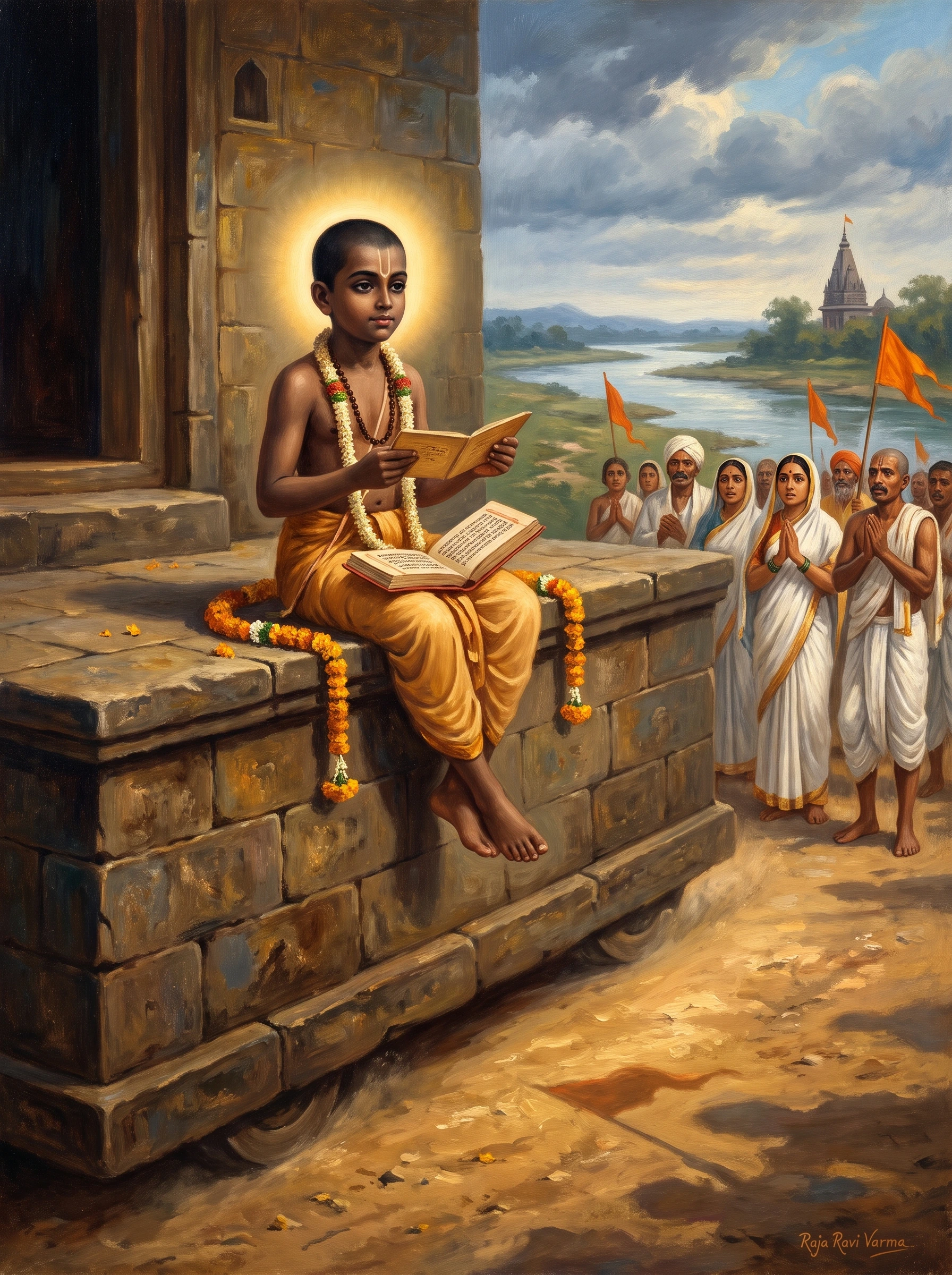
Dnyaneshwar, the Young Master
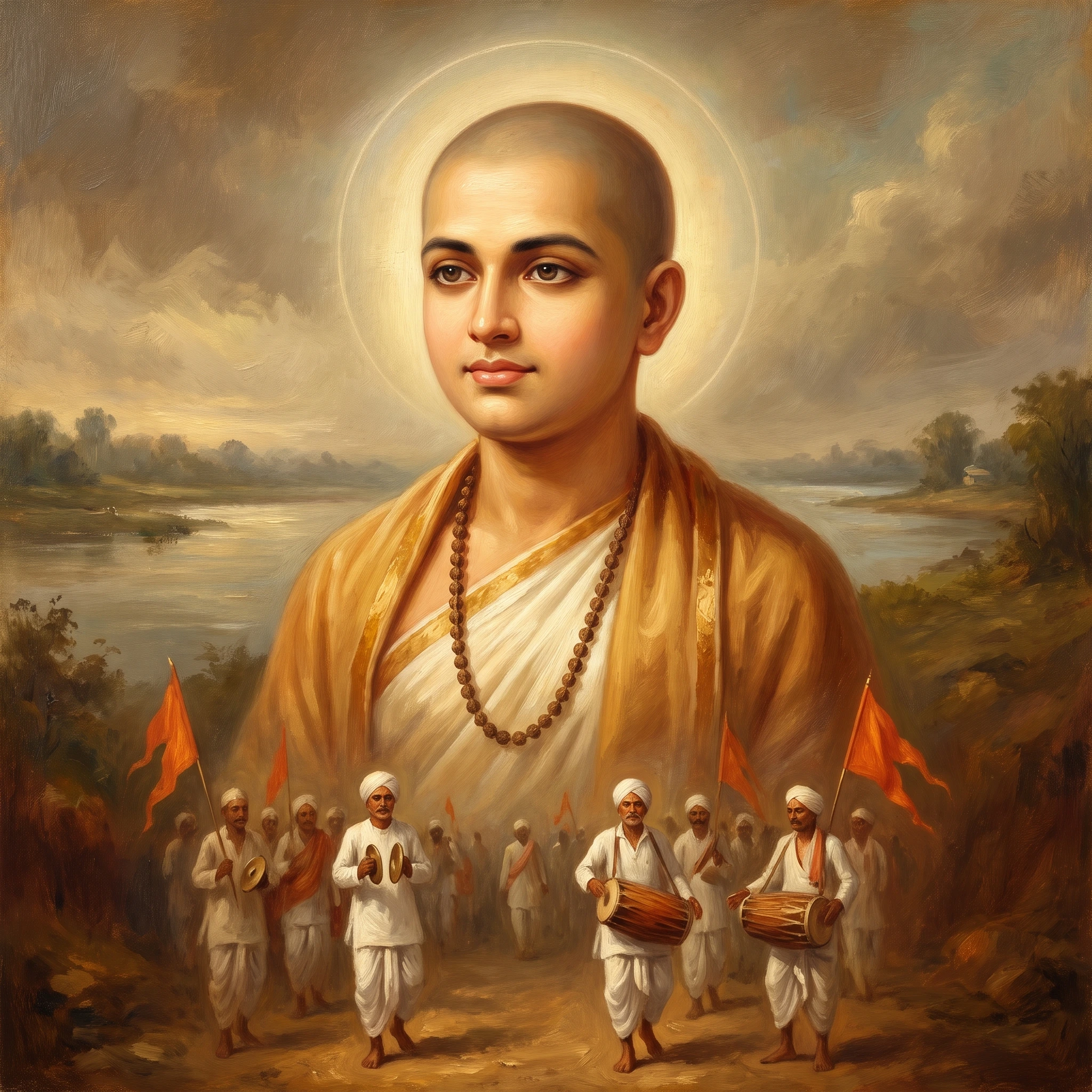
Dnyaneshwar (Jnanadeva), a thirteenth-century saint who wrote the Dnyaneshwari — a Marathi commentary on the Bhagavad Gita — and composed abhangs, is regarded as a foundational figure of the Warkari tradition.
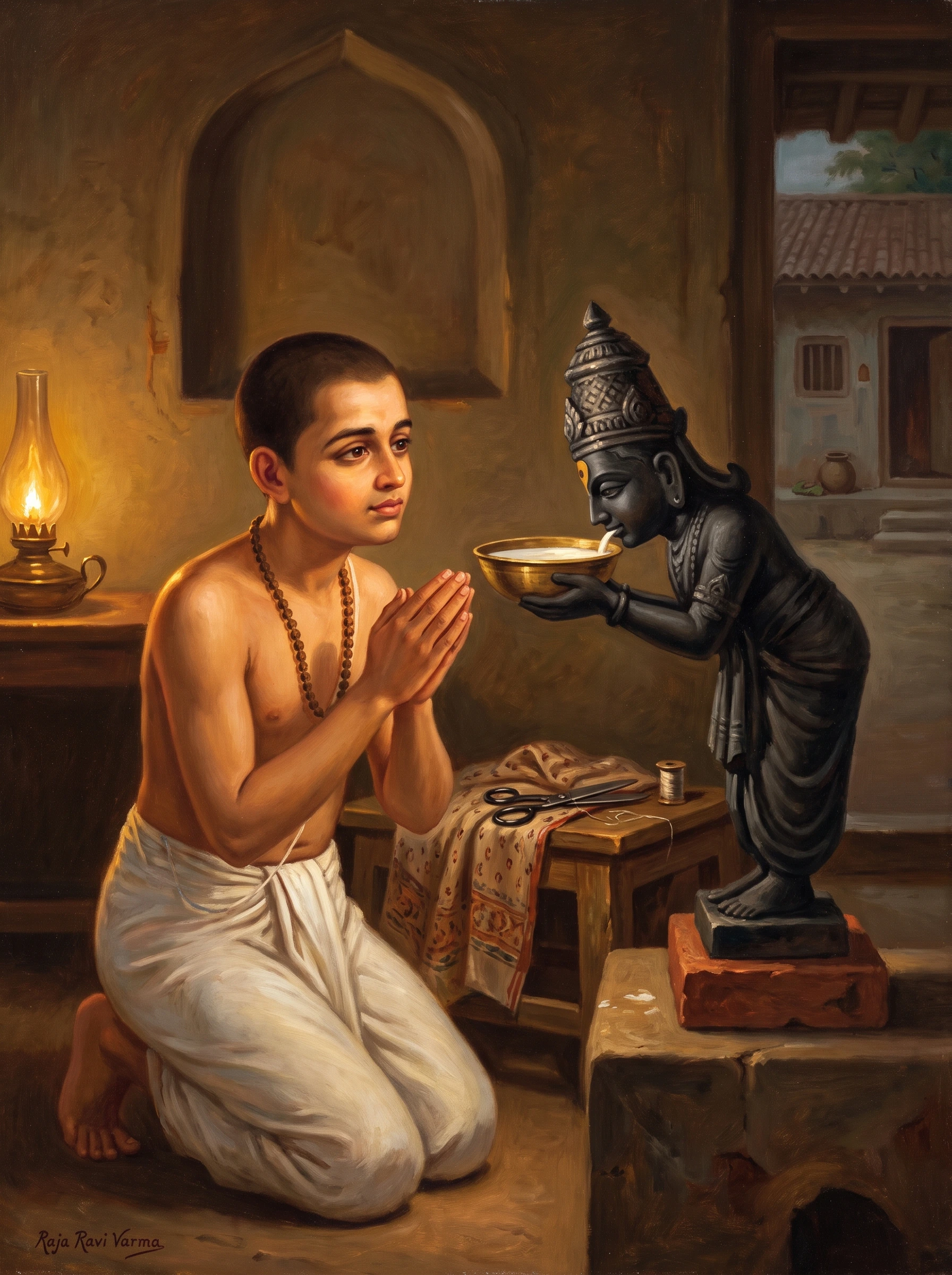
Namdev, the Tailor-Saint
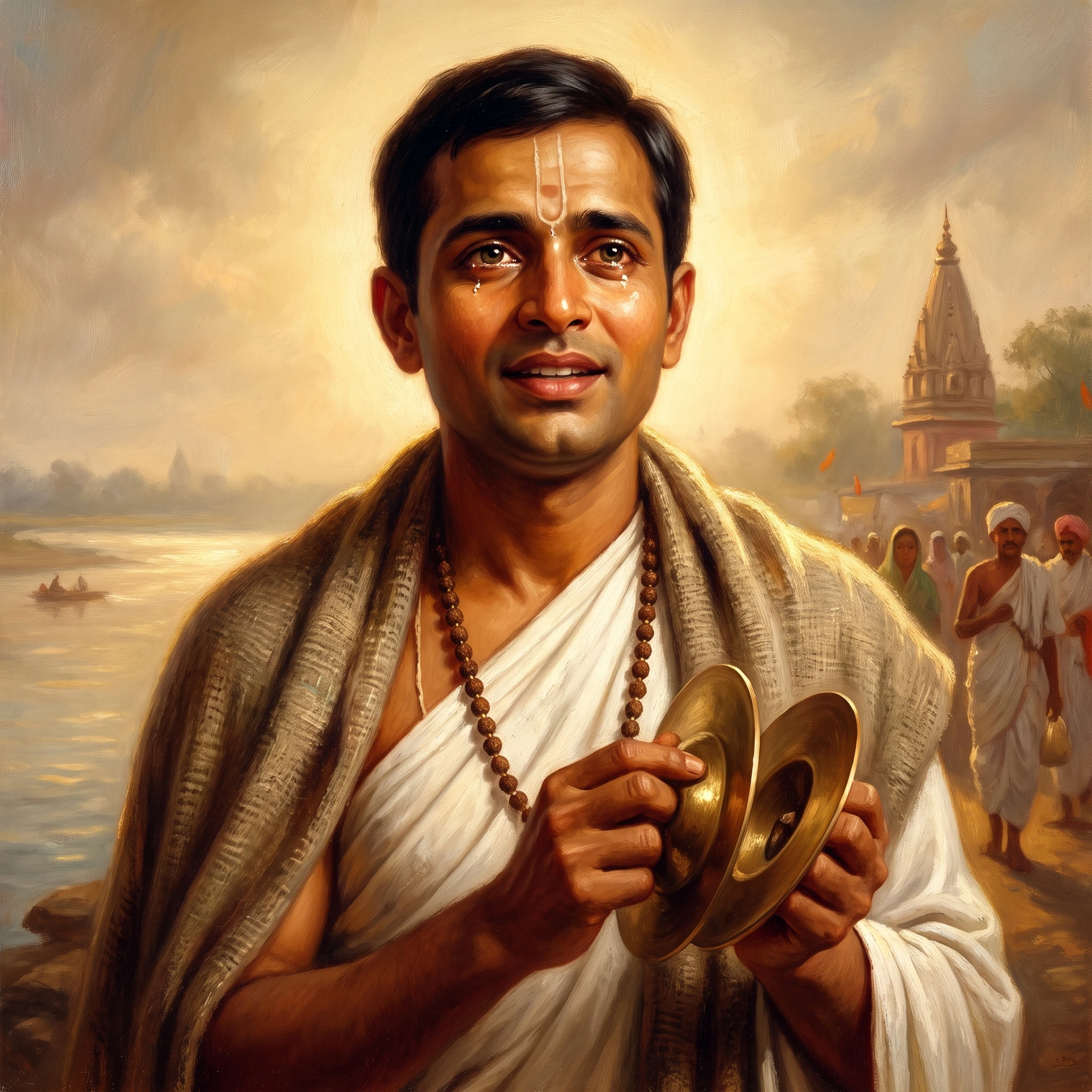
Namdev, a thirteenth- and fourteenth-century saint-poet of the tailor (shimpi) community, composed abhangs in Marathi and is also honoured in the Sikh tradition, with several of his hymns included in the Guru Granth Sahib.
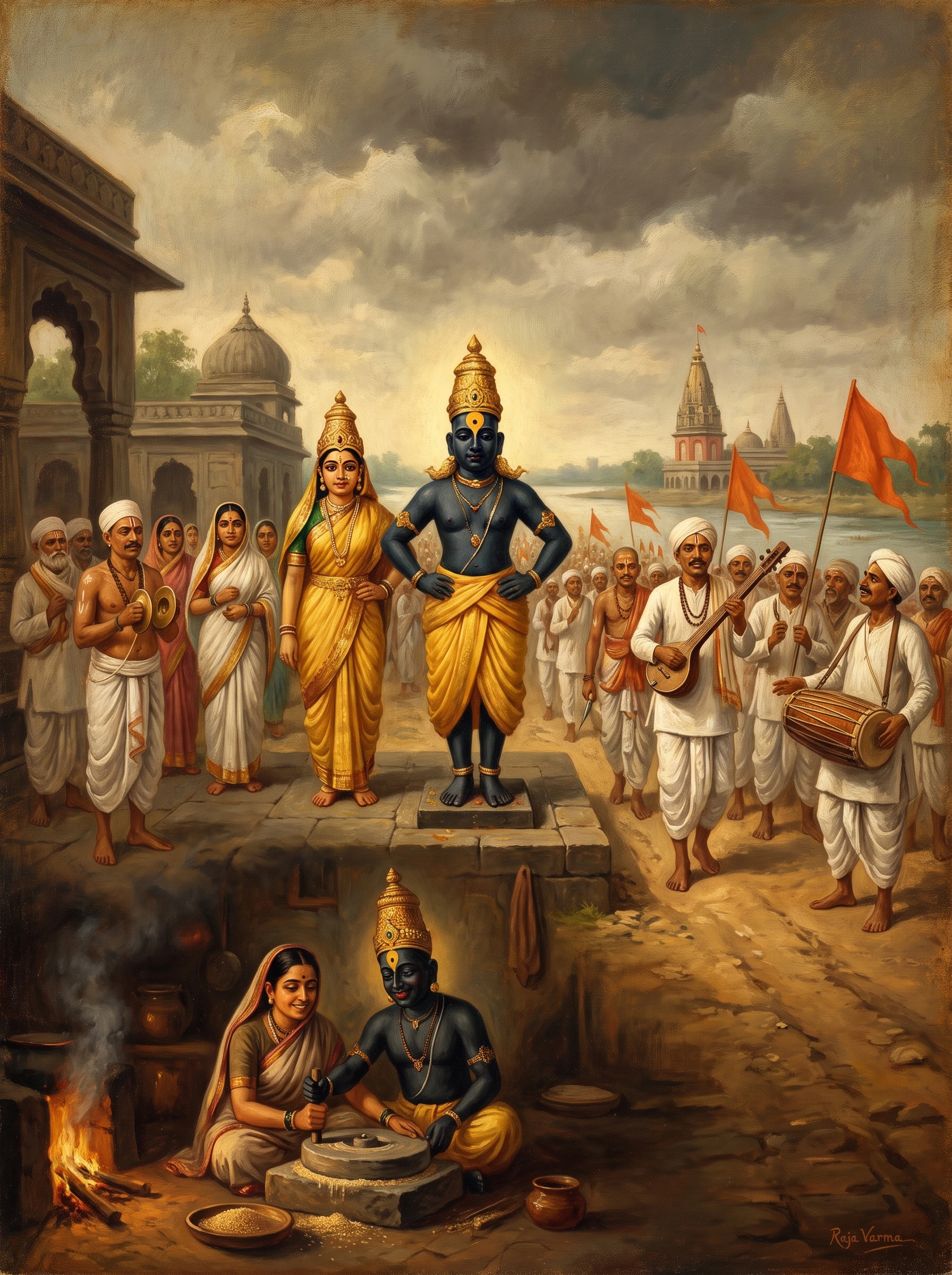
Janabai and the Women Saints
Janabai, a maidservant in Namdev's household, composed abhangs describing Vitthal sharing in her daily chores, and stands among the women saints of the Warkari tradition whose devotional poetry gave voice to domestic and personal experience.
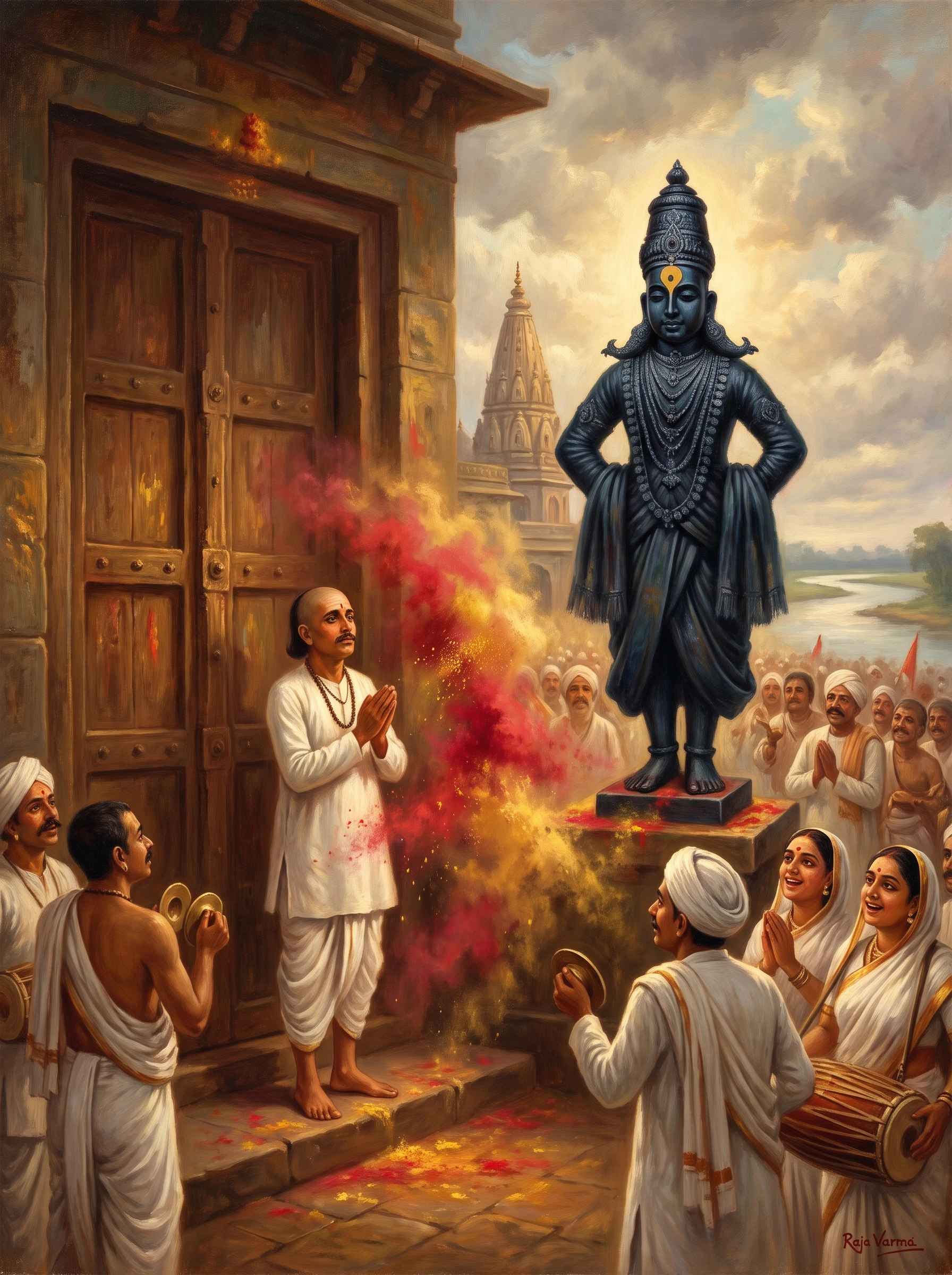
Chokhamela and Soyarabai
Chokhamela, a saint-poet born into the Mahar community treated as untouchable, and his wife Soyarabai composed abhangs voicing devotion to Vitthal alongside the pain of social exclusion, making them enduring figures of the tradition's egalitarian ideals.
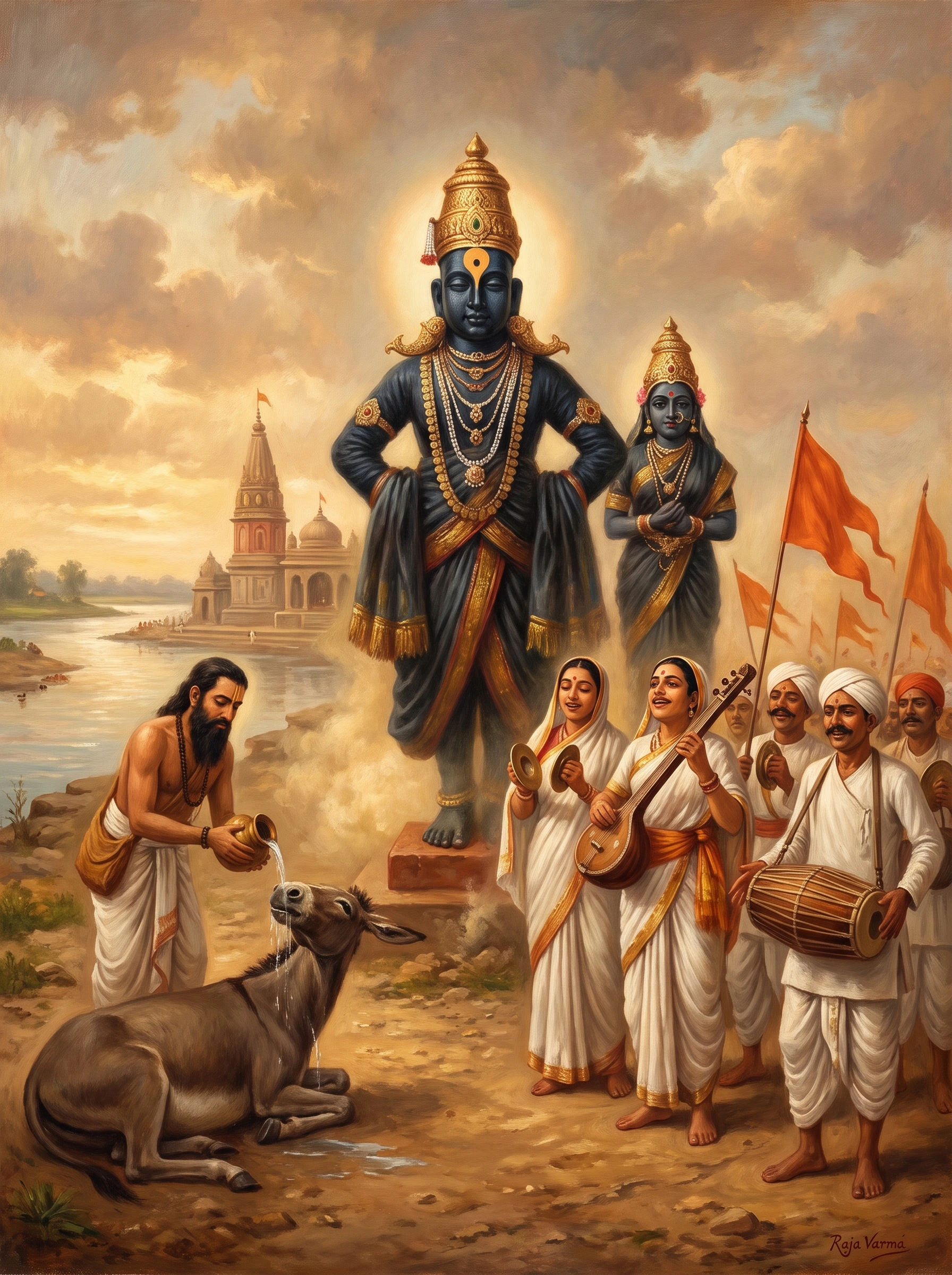
Eknath, the Householder Saint
Eknath, a sixteenth-century saint-poet and scholar of Paithan, prepared an authoritative recension of the Dnyaneshwari, composed the Eknathi Bhagavata and numerous abhangs, and modelled devotion lived out within the duties of a householder.
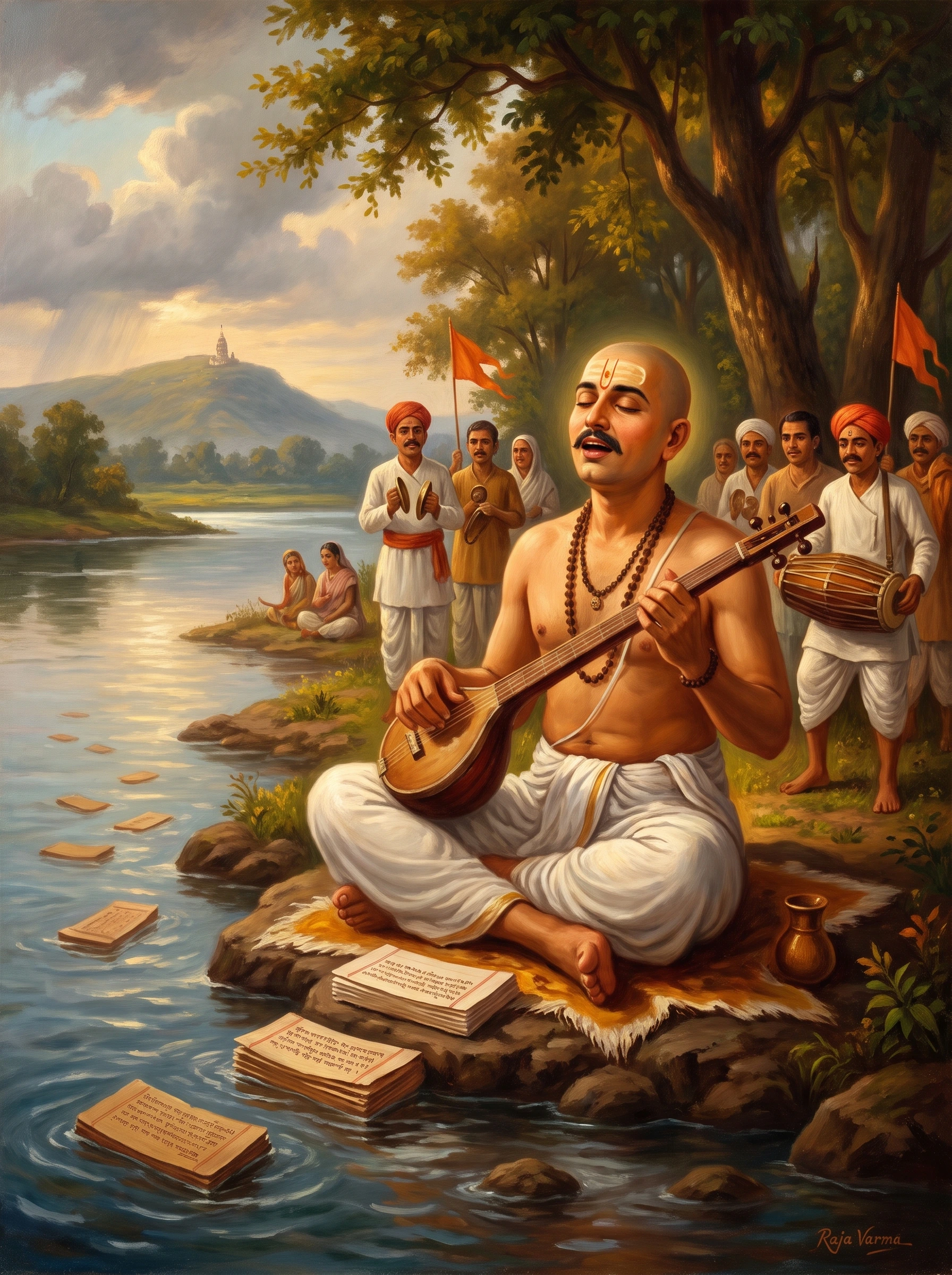
Tukaram, the Voice of the People
Tukaram, a seventeenth-century saint-poet of Dehu, composed some of the most beloved and widely quoted abhangs in Marathi, expressing intense devotion to Vitthal in plain, direct language drawn from everyday life.
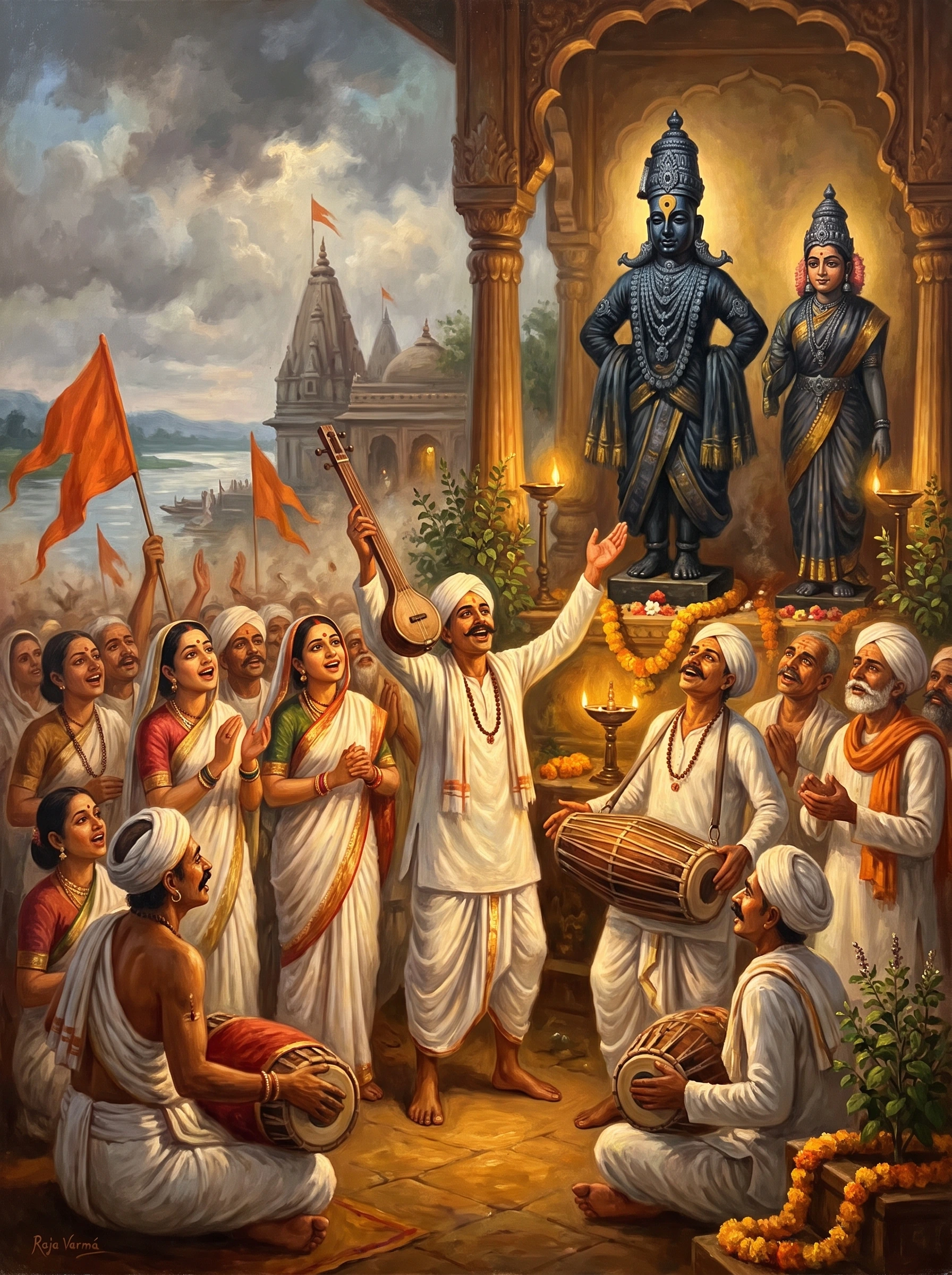
The Name of God
Namasmarana, the loving repetition and remembrance of the divine Name, is a central practice celebrated throughout the abhangs, held up by the Warkari saints as a path to God open to everyone regardless of caste, learning, or wealth.
Longing and Union
Many abhangs voice the soul's longing for Vitthal and its joy in union with him, drawing on the language of separation and reunion to express the devotee's yearning for the God of Pandharpur.